"Finding out I got the scholarship blew me away," Brown says. "Without it, HWS was definitely out of my family's price range. But HWS was exactly what I needed at that time of my life, so getting that scholarship was just serendipitous."
Also serendipitous was a conversation with President Mark D. Gearan in 2004. Brown was working a campus event at the President's House and in between talking to influential guests, Gearan asked about his plans after graduation.
"I said I didn't know... I wanted to travel. And he just looked at me and asked, 'Have you thought about the Peace Corps?' And I said, no, not at all, that's crazy," Brown recalls.
Gearan invited him to sit in on a talk by returning Peace Corps volunteers. Motivated, Brown applied, was accepted and assigned to serve as an Agricultural Extension Officer in the Village of Maduma in Tanzania.
"The Iringa Region is an absolutely beautiful part of the world and is home to some of the happiest and kindest people I have ever met. It was truly a life-changing experience," Brown says.
After returning to the U.S., Brown studied secondary education at George Washington University and became a high school science teacher in Maryland, putting his HWS biology degree to work. To supplement his income, he took a side job at a coffee shop, which ignited a new passion.
"Working in that coffee shop really plugged me into my passion for the hospitality business," Brown says. "Over time I found myself thinking Takoma Park really needed a quality open-all-day coffee and breakfast place, and that maybe I should open one."
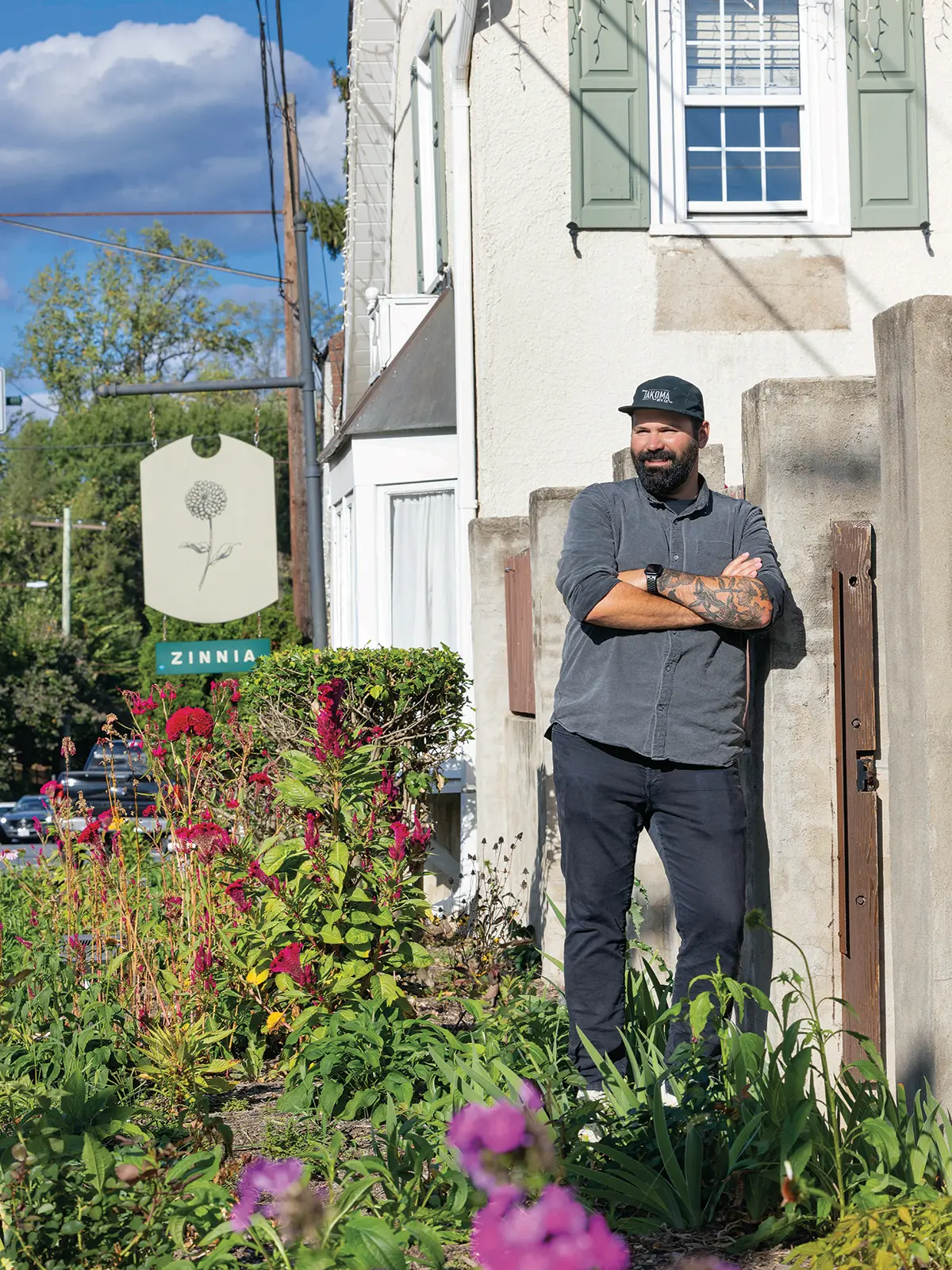
That idea became a reality in 2017 with Takoma Bev Co. The café was an immediate hit, and its success paved the way for more ambitious projects like Zinnia, Soko Butcher-Deli and Motorkat, each designed to fill a niche within the community.
Brown says his civic-centered business philosophy, which focuses on community needs, sustainability and local sourcing, was deeply influenced by his time in Africa.
"In Maduma, the word sustainability is not part of anyone's dialogue, but they live the most sustainable lives you can ever imagine. They eat the food they grow and there's basically no waste. I learned a lot from experiencing life at that level," Brown says.