HWS News
13 March 2026 President’s Forum Examines the Politics of Authenticity
Author and political strategist Maya Rupert challenges assumptions about race, leadership and the pressure to “be real.”
Being inauthentic isn’t necessarily for a lack of pluck, of grace or enlightenment. It’s not always a personal failure.
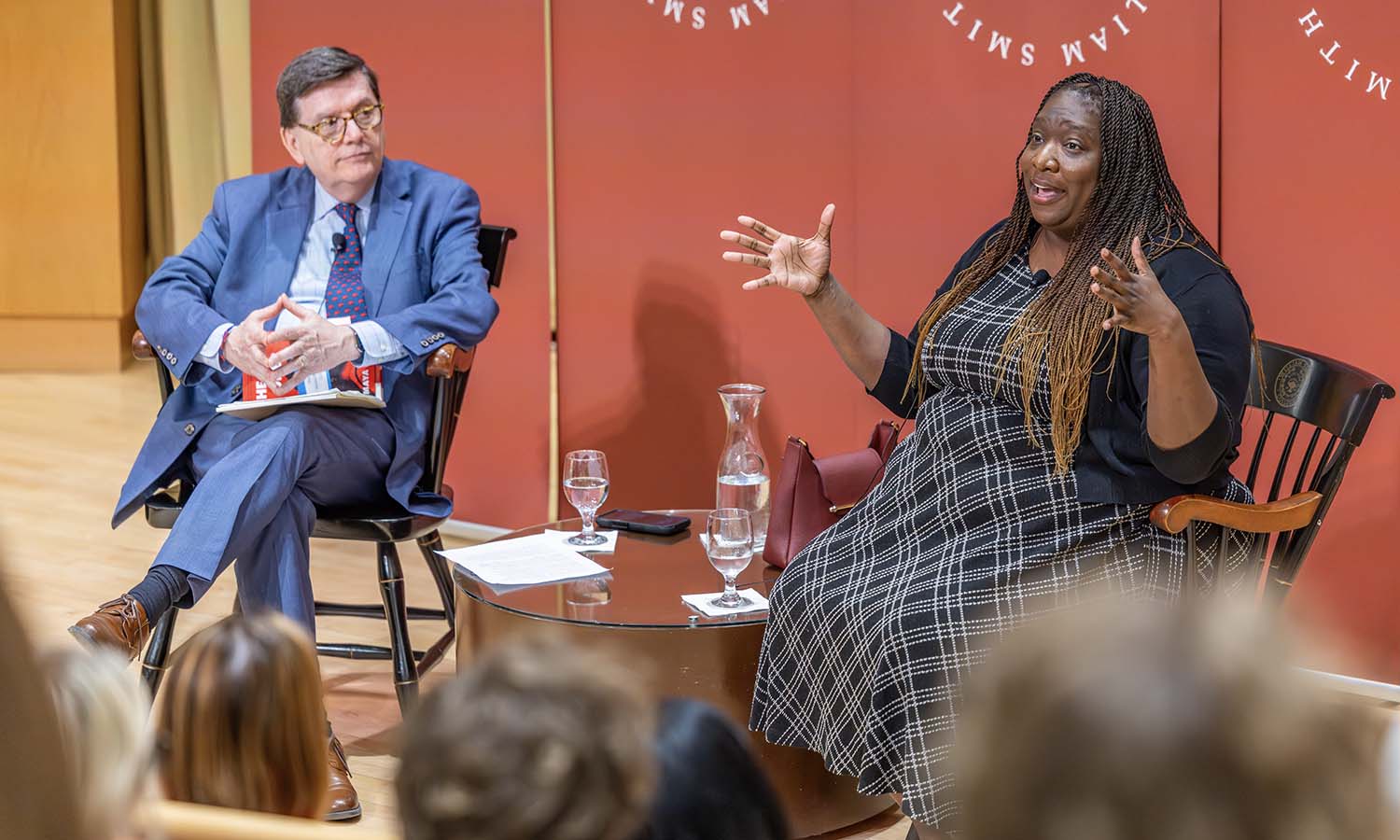
“Authenticity is supposed to free us, but for some of us, it stands in the way of that freedom,” Maya Rupert said Tuesday evening during a President’s Forum event in Froelich Hall of the Gearan Center for the Performing Arts.
Rupert visited Hobart and William Smith to discuss her new book, The Real Ones: How to Disrupt the Hidden Ways Racism Makes Us Less Authentic.
President Mark D. Gearan introduced Rupert as “a lawyer by training, a Californian by birth and a political strategist of considerable accomplishment,” noting that she is one of only three Black women to have run a major U.S. presidential campaign.
In her book and during the conversation on campus, Rupert examined the concept of authenticity.
“We hear about it so much, and it's talked about as this kind of unmitigated good,” Rupert said. “But how it often plays out for many of us is it actually operates a lot more like a privilege that is not equally accessible to everyone, and it's not equally comfortable for everyone.”
Rupert reflected on growing up in a California community as one of the few Black families and the only Black student in many of her classrooms. Those experiences shaped how she approached conversations about race and identity early in life.
“I had gotten very comfortable with making other people comfortable around those kinds of conversations,” she said. “In a lot of ways that served me well in politics. But as I explore in the book, it created a different dynamic for me personally, where I constantly felt like I was thinking about these issues in terms of how other people would perceive me.”
Maya Rupert joins faculty, staff and students at President Mark D. Gearan's home. 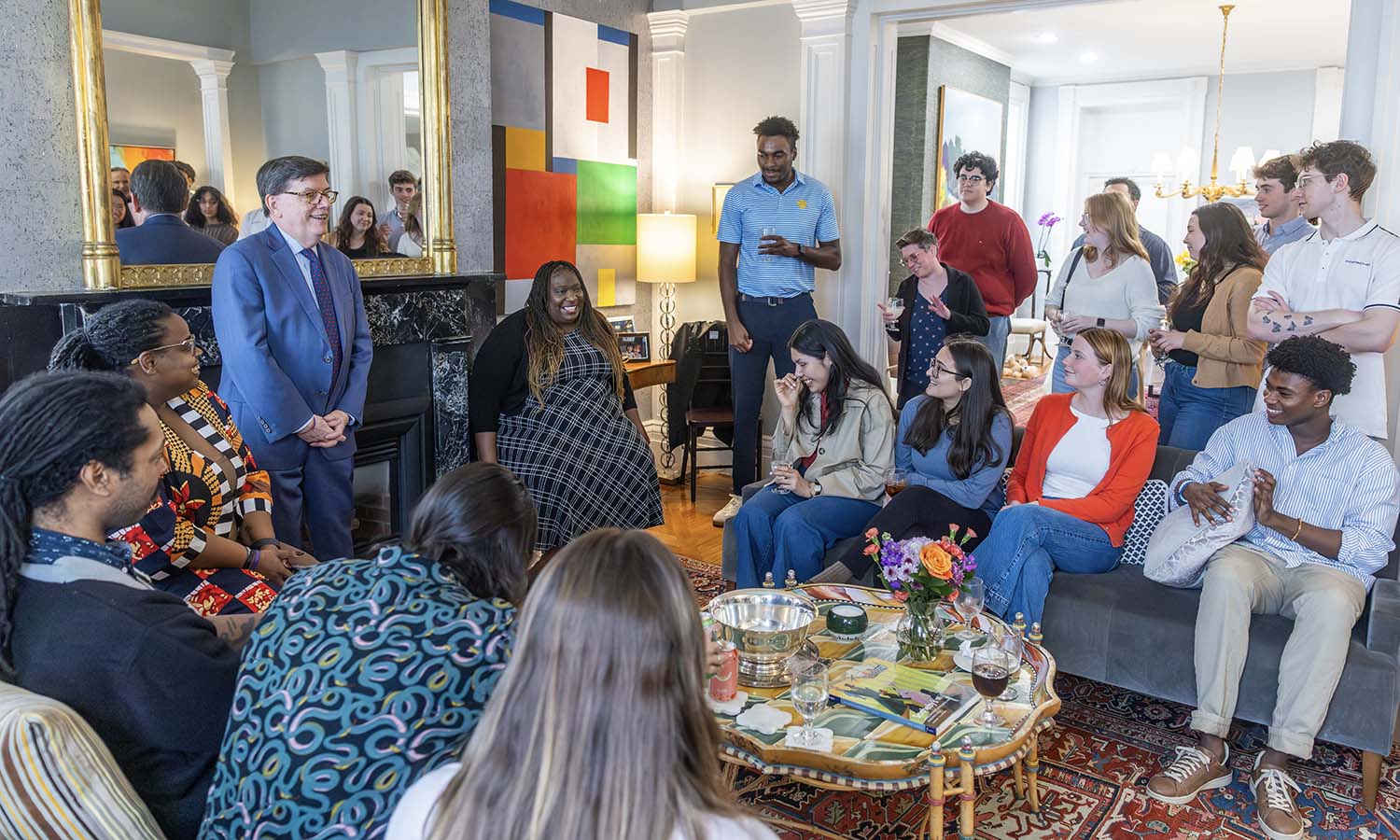
“I think that for a lot of people with marginalized identities, one of the first things we learned is to be strategically inauthentic, so that we can make the people around us, with the dominant viewer narrative, comfortable,” Rupert said.
Later in their careers, Rupert noted, those same individuals are often encouraged to simply “be authentic,” a request that can feel disconnected from the realities that shaped their success. “It feels like someone is basically asking you to shed something that is the only reason you got here,” she said.
Rupert argued that the pressure to perform authenticity is especially pronounced in politics, where voters often describe authenticity as a defining trait of leadership. Being white and male are two other defining traits, she said.
Candidates of color, she explained, often face a more delicate balancing act.
“You have to be able to show that you've got your community vote lockdown,” she said, “but you also need to do it in a way that doesn't cordon you off so that you're just the Black or the Brown candidate.”
Ultimately, Rupert encouraged the audience to reconsider the way authenticity is discussed in public life.
“People need to recognize that when someone isn't showing up authentically, many times, it's because they've learned that it's dangerous to do so,” said President Gearan quoting The Real Ones during the forum. “If someone wants to change that, they need to focus on making society safer, not making us braver.”
Established in 2000 by Gearan, the President’s Forum Series brings influential thinkers and leaders to campus to engage students, faculty, staff and community members in conversations that shape public life. Up next is President and CEO of the New England Aquarium Vikki Spruill P’12 who will discuss ocean conservation on Wednesday, April 15 at 7 p.m. in the Vandervort Room of the Scandling Campus Center.