
HWS News
13 November 2025 A Legacy of Learning and Giving
From Provost to Trustee, Dr. Teresa Amott L.H.D. ’11 reflects on the creativity, collaboration and spirit that continue to draw her back to Hobart and William Smith.
From her white, spired office loft in the forests of northeastern Pennsylvania, Knox College President Emerita Dr. Teresa Amott L.H.D. ’11 reflects on her career in higher education and why she identifies so deeply with Hobart and William Smith.
At HWS, Amott spent six years as provost and dean of faculty before leaving in 2011 to become the first woman president at Knox College in Galesburg, Ill. After 10 years, in what the liberal arts college called a transformative presidency, Amott retired in 2021. The following year, she returned to HWS to serve on the Board of Trustees.
Currently, Amott serves as HWS’ Chair of Belonging, Diversity and Equity, Enrollment Management and Presidential Review where she brings career-spanning experience as professor, senior administrator, president, trustee and long-term donor.
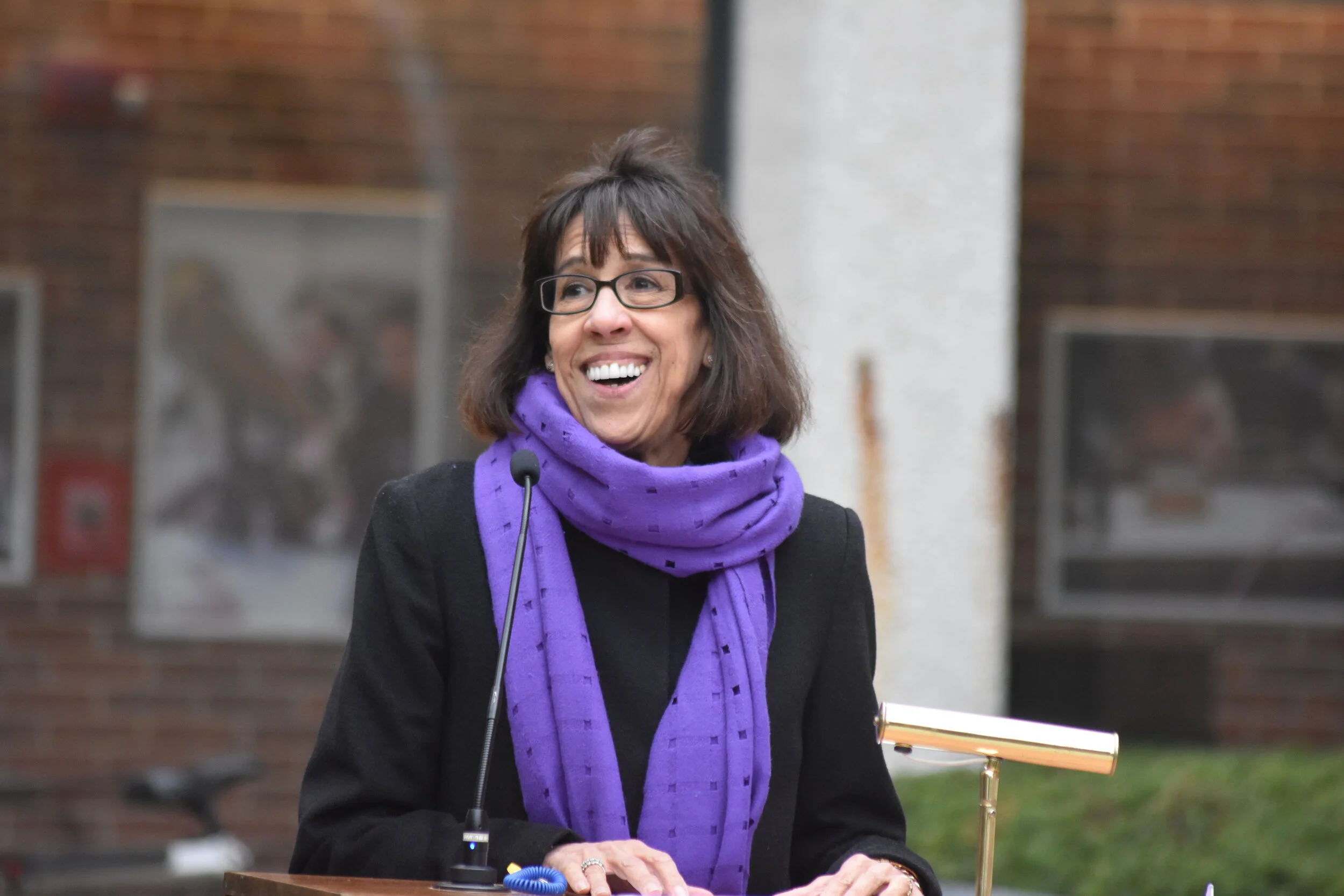
“There’s something special about Hobart and William Smith,” Knox College President Emerita Dr. Teresa Amott L.H.D. ’11 says. “It’s aesthetic, intellectual, physical, emotional — there’s just something about the interdisciplinarity of it that’s very interesting. It’s the people, and the spirit, that make it extraordinary.”
With a recurring and unrestricted gift made to the Annual Fund this year, Amott sat down to explain the importance of helping make an HWS education affordable and accessible to more students.
The Annual Fund is vital, current-use funding that enables HWS to fulfill its mission to educate and graduate well-rounded, compassionate, innovative students who make an indelible impact on their communities and the world.
Amott describes her years at HWS as collaborative and innovative, which she realized are a hallmark of the institution. Her motivation to give is rooted in her gratitude — and a recognition of the transformative power of education. “I drew on the talent and creativity of the people I worked with to become a more talented administrator,” she says. “In a way, that’s analogous to a student. I may not have been a student, but I was learning.”
Receiving an honorary degree from HWS in 2011, Amott says, symbolizes that lifelong learning. “It really represents what I learned from the people I worked with and from the students,” she says.
In the following interview, Amott reflects on her career, the lessons she learned along the way and some of the reasons she continues to serve HWS.
Over the course of her career in education, she says, philanthropy has become more important. “Every scholarship dollar comes from philanthropy in some important way,” she notes, emphasizing the urgency of supporting access to education amid rising costs and widening wealth disparities. “There’s so much untapped talent,” she says. “Anything we can do to make this education available to those with the ability to appreciate it — it’s critical, especially now.”
Q. You have spent your life in higher education: as an educator, administrator, trustee and donor. How has your perspective on philanthropy for liberal-arts colleges changed along the way?
For me, it’s realizing how necessary it is for us to provide financial aid to the students who come to us from a wide variety of economic backgrounds, to compensate our faculty and staff so that they can give their best. … It means a great deal for HWS but really for society to make sure that education of this caliber is available to those with the talent to appreciate it, is critical, and it's especially critical now.
Q. As an economist, college provost, dean and president, you have worked extensively with academic budgets and know how essential flexible funding is. What would you like the public to understand?
Unrestricted giving really allows the institution to adapt and to grow. I think the message I want to send is, give what you can. Yes, large gifts have tremendous transformative power, but smaller contributions are just as vital. You don’t have to be a person whose life’s work has brought you great wealth. You can still contribute to the future of this institution because the cost of providing the education we want to provide is significant. Part of my mission is encouraging smaller dollar donors.
Q. You’ve seen firsthand how colleges evolve over time — academically, financially, culturally. From that long view, what gives you the most confidence in HWS’ direction today?
Liberal arts colleges are an exceptional American institution — many founded in the 18th and 19th centuries have survived economic downturns as severe as the Great Depression, social upheavals, technological transitions — farming, manufacturing, AI — and still have remained relevant and necessary. So, it is the liberal arts and sciences character of Hobart and William Smith that gives me the most confidence. In addition, the leadership of the institution is ready to meet this moment.
Q. In your various and important roles at HWS, what experience convinced you this institution is worth investing in financially?
At HWS, there is a level of creativity where one person, one student, one faculty member can have an idea and make an impact. I've been at wonderful liberal arts colleges. I graduated from Smith; I taught at Wellesley; I was an administrator at Gettysburg. I also taught at Bucknell. I came to HWS, and then I went out to Knox--these are liberal arts institutions are all remarkable, but there is something special about HWS -- a spark, a creative spirit.
Background Dr. Teresa Amott: The daughter of a U.S. Foreign Service father and Brazilian mother, Amott was born in Bolivia and spent most of her childhood studying abroad. As an undergrad, she went to Smith College, where she earned a B.A. in economics and continued to Boston College, where she earned her Ph.D. in economics. Amott taught at Wellesley College, the University of Massachusetts — Boston and Amherst and Bucknell University before moving into administration positions at Gettysburg College, HWS and Knox. As Provost and Dean of Faculty at HWS, Amott helped design and implement the strategic plan focused on expanding the academic program and faculty, increasing faculty diversity and renovating the academic facilities. She also helped formulate and execute HWS' $200 million campaign to construct a new performing arts center, renovate the student center and athletics facilities, and enhance information technology services. She worked to connect HWS and the Geneva community to develop community-based research projects, from energy efficiency to childhood obesity to neighborhood revitalization. Amott received an honorary degree from HWS in 2011.