HWS News
21 October 2026 50 Years Further: Profiles of the Class of 1977
Frank Kohn ’77: Conservationist, Wildlife Researcher, Photographer and Holocaust Awareness Educator
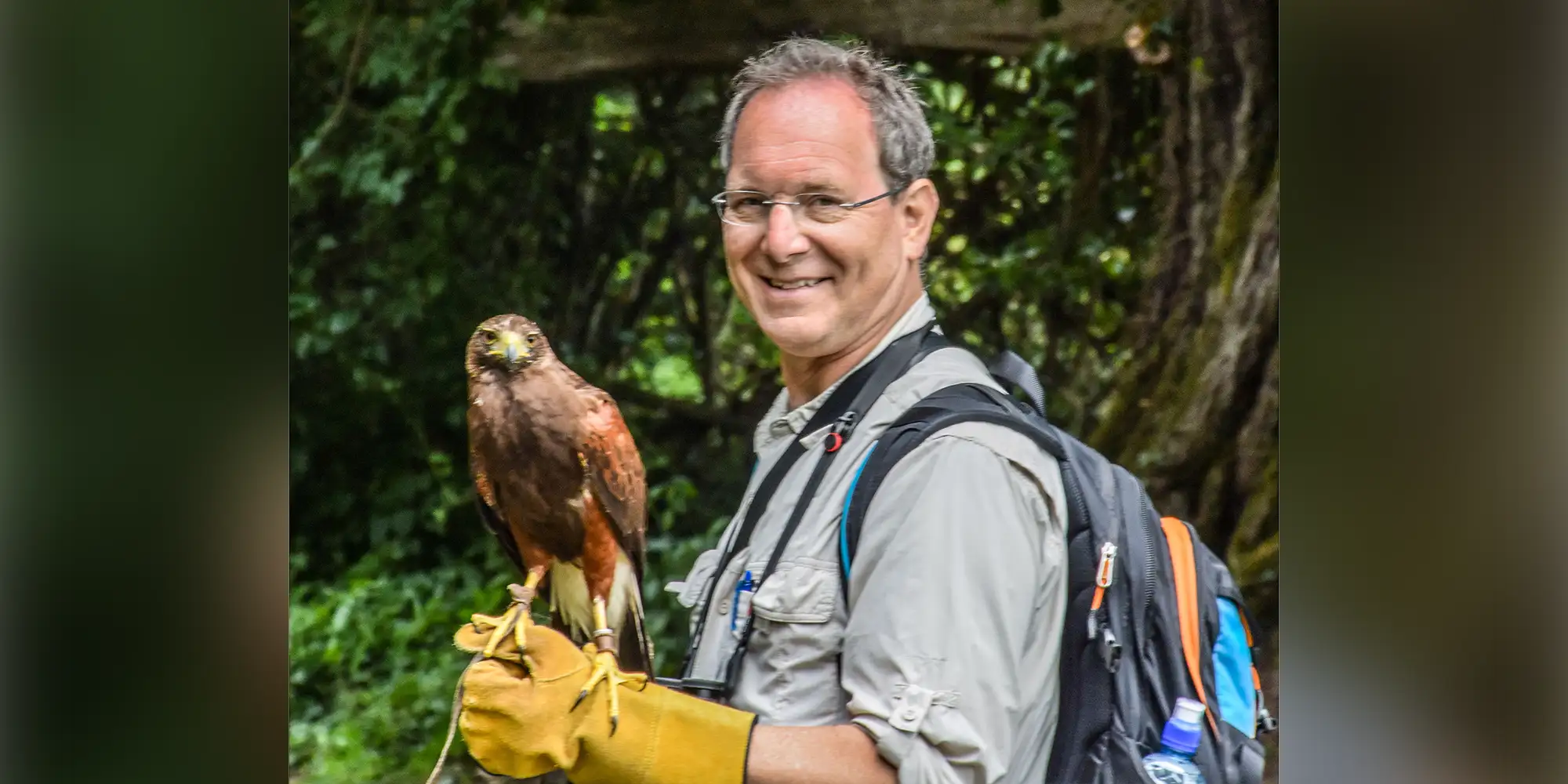
“When I was at Hobart, I never thought I’d be doing anything like this,” says Frank Kohn ’77, reflecting on a career that took him from studying animal behavior to leading conservation efforts and representing the United States government in international negotiations. After 47 years working in conservation, Kohn is now retired from the field but continues to make an impact through photography, continuing his work with zoos and airlines on wildlife transportation and speaking engagements at schools, where he promotes Holocaust awareness.
Kohn’s path to conservation began at Hobart and William Smith, where he initially intended to study medicine. After meeting Professor Emeritus of Psychology Martin J. Kelly Jr., however, he became a psychology major. His interests continued to evolve as he explored other subjects, including animal behavior and zoology.
One of Kohn’s fondest memories is an ornithology class taught by Professor Emeritus of Biology Richard Ryan. The class regularly went birdwatching, with Ryan challenging students to count the number of bird species they spotted. Although Ryan consistently identified more species than his students, Kohn remembers the final outing, when the students finally managed to match their professor.
After graduating, Kohn attended graduate school to pursue a career in teaching, writing his master’s thesis on the role of olfaction in dogs. His career took an unexpected turn while visiting his brother in Washington, D.C. and exploring the Smithsonian National Zoo. There, Kohn met Devra Kleiman, a renowned animal behavior researcher whose work he had long admired. Their conversation led to an offer to pursue his master’s thesis at the Smithsonian’s research facility in Front Royal, Virginia in animal behavior research, opening the door to a career he had not originally imagined.
Kohn went on to spend three years at the Audubon Zoo in New Orleans, where he helped rebuild the zoo’s image working with large animals there, before becoming a general curator at New Jersey’s Turtle Back Zoo.
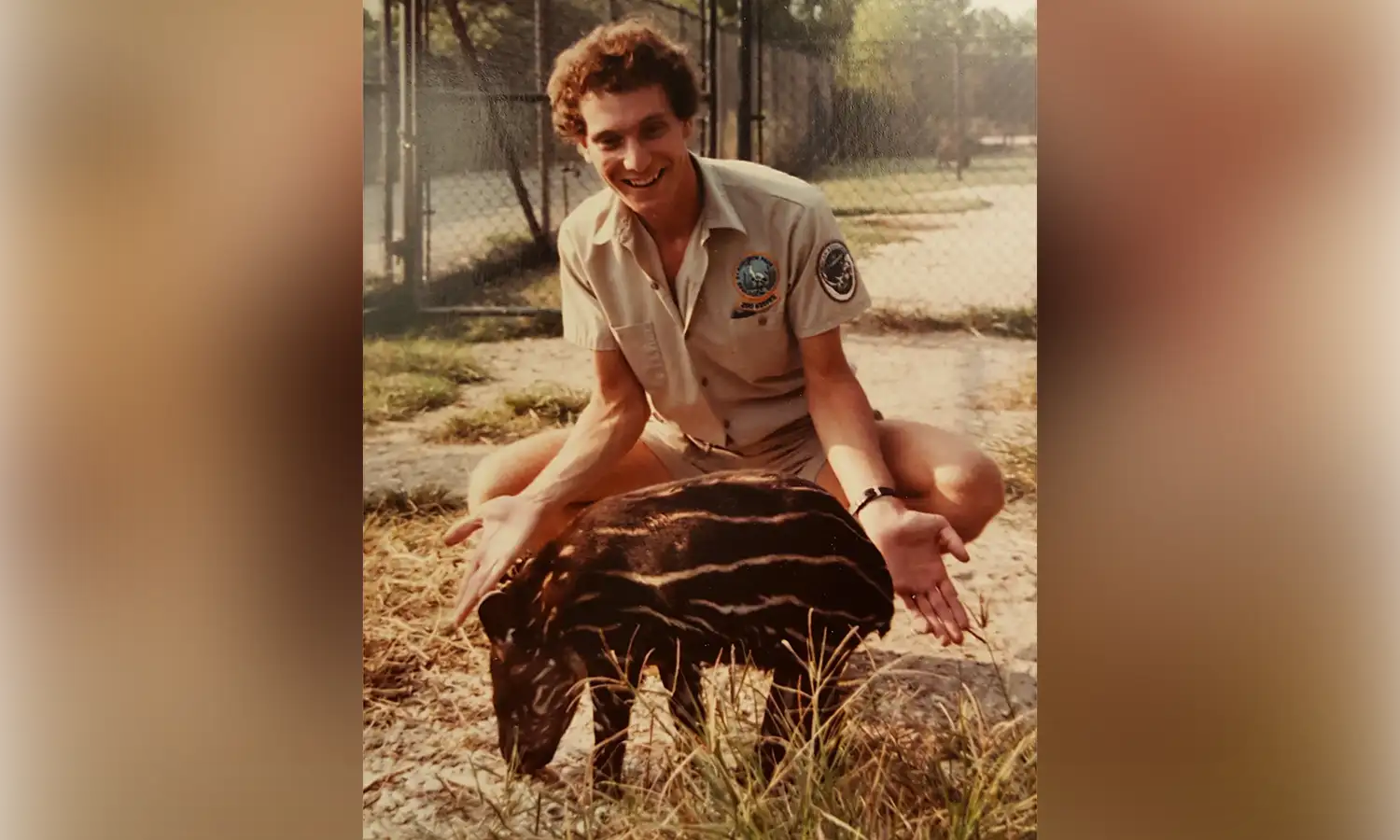
"It wasn't even my first day as a zookeeper at the Audubon Zoo way back in 1980. I was being introduced to my new work area to meet the animals I would be officially caring for the next day, and I was told by the keeper that I would help him medicate Squeak's foot.
"Who's Squeak?" I asked. "Our adult male South American tapir," the keeper replied. Up to that point the only thing I knew about tapirs was that a keeper I knew had been attacked by one, so I was a little on edge as we entered the exhibit and Squeak approached us.
The keeper told me to scratch him behind the ear and as soon as I started, Squeak sat down on his rear legs and eventually rolled onto his side like a content dog. Fear gone, Squeak and I were instant friends."
Kohn later returned to the National Zoo, where he oversaw research collections, acquisitions and dispositions, and managed the North American Red Panda Species Survival Plan (SSP). He then joined the Wildlife Trade and Conservation Branch of the U.S. Fish and Wildlife Service’s (USFWS) International Affairs Division where he spent 22 years before retiring in 2025. In this role, he focused on developing and updating regulations to ensure the safe and humane transport of wildlife. He worked closely with zoos and the International Air Transport Association (IATA) on its Live Animal Regulations and currently still serves on its Live Animals Working Group.
Kohn also coordinated the USFWS Plant Rescue Center Program and led efforts on several issues related to the Convention on International Trade in Endangered Species of Wild Fauna and Flora (CITES), including pangolins, cheetahs, wildlife confiscation, stockpiles, domestic markets and livelihoods. He also helped establish the Association of Zoos and Aquariums (AZA) Wildlife Confiscation Network, which assists U.S. Fish and Wildlife Service inspectors in finding appropriate placements for confiscated wildlife.
While working in the USFWS, he had the opportunity to represent the U.S. government in international negotiations involving China and the European Union, including discussions surrounding the trade in pangolins. The experience was, as Kohn puts it, a “kick in the pants.” Looking back, he says, “When I was at Hobart, I never thought I’d be doing anything like this.”
Over the course of his career, Kohn found that his interest in animals could translate into meaningful contributions to conservation policy and wildlife protection.
“My years with the National Zoo and U.S. Fish and Wildlife Service were incredibly rewarding and gave me amazing experiences and opportunities to work on issues and with the most passionate and dedicated people that have allowed me in some small way to help preserve the incredible biodiversity of our tiny blue dot,” he says.
Today, he continues to pursue his interests through photography, and through speaking engagements that bring his experiences and knowledge to new audiences. He particularly enjoys talking with students about his career and the unexpected directions professional life can take. He also speaks locally in schools about his parents’ experiences as Holocaust survivors.
Kohn credits HWS with helping him become more confident, explore a wide range of interests and develop the networking skills that proved essential throughout his career. HWS also allowed him to create an adaptive study plan, giving him the flexibility to earn his degree while pursuing subjects that interested him, including ornithology.
For Kohn, the lessons he carries forward extend beyond any single field of study: “Networking is the key to anything,” he says. He also offers a reminder about the value of relationships over competition: “It’s more important to get along than to get ahead.”