HWS News
7 August 2026 HWS and The Fletcher School at Tufts University Create a New Pathway to Global Leadership
The collaboration connects the HWS International Relations program with Fletcher’s two-year Master of Arts in International Affairs, Master of International Business and Master of Science in International Economics. Through this partnership, HWS students can apply to these master’s degrees through three admissions pathways: Map Your Future, early assurance, or the traditional admissions process.
Map Your Future is a distinctive admissions pathway designed for students who want to gain meaningful professional experience before returning to graduate school. HWS students can apply in their senior year and secure admission to Fletcher, then spend two years building career-relevant experience before enrolling. The program gives students the confidence of knowing they have a place at Fletcher while allowing them to strengthen their professional skills, clarify their career goals and bring valuable real-world experience to the classroom.
Photo Gallery
For a more immediate transition to graduate school, students with a minimum GPA of 3.7 may apply through Fletcher's Early Assurance program in the spring semester of their junior year. Qualified HWS students receive conditional admission while completing their undergraduate degree and then move directly into graduate study after graduating from HWS. Students may also choose to apply through Fletcher's regular admissions process during their senior year.
“The Fletcher School is at the top of our field and Fletcher alumni lead in the public and private sector on a global scale. It will be exciting to see more HWS students join such a community of leaders,” says Professor of International Relations Stacey Philbrick Yadav.
“From the minute we began exploring this collaboration, we were struck by the close alignment between the curricula at The Fletcher School and the interdisciplinarity of the International Relations department. The emphasis on the study of politics, economics, and language at HWS prepares our students to succeed from the start at Fletcher, and Fletcher’s intentional cultivation of a sense of cohort should feel familiar to students coming out of our department.”
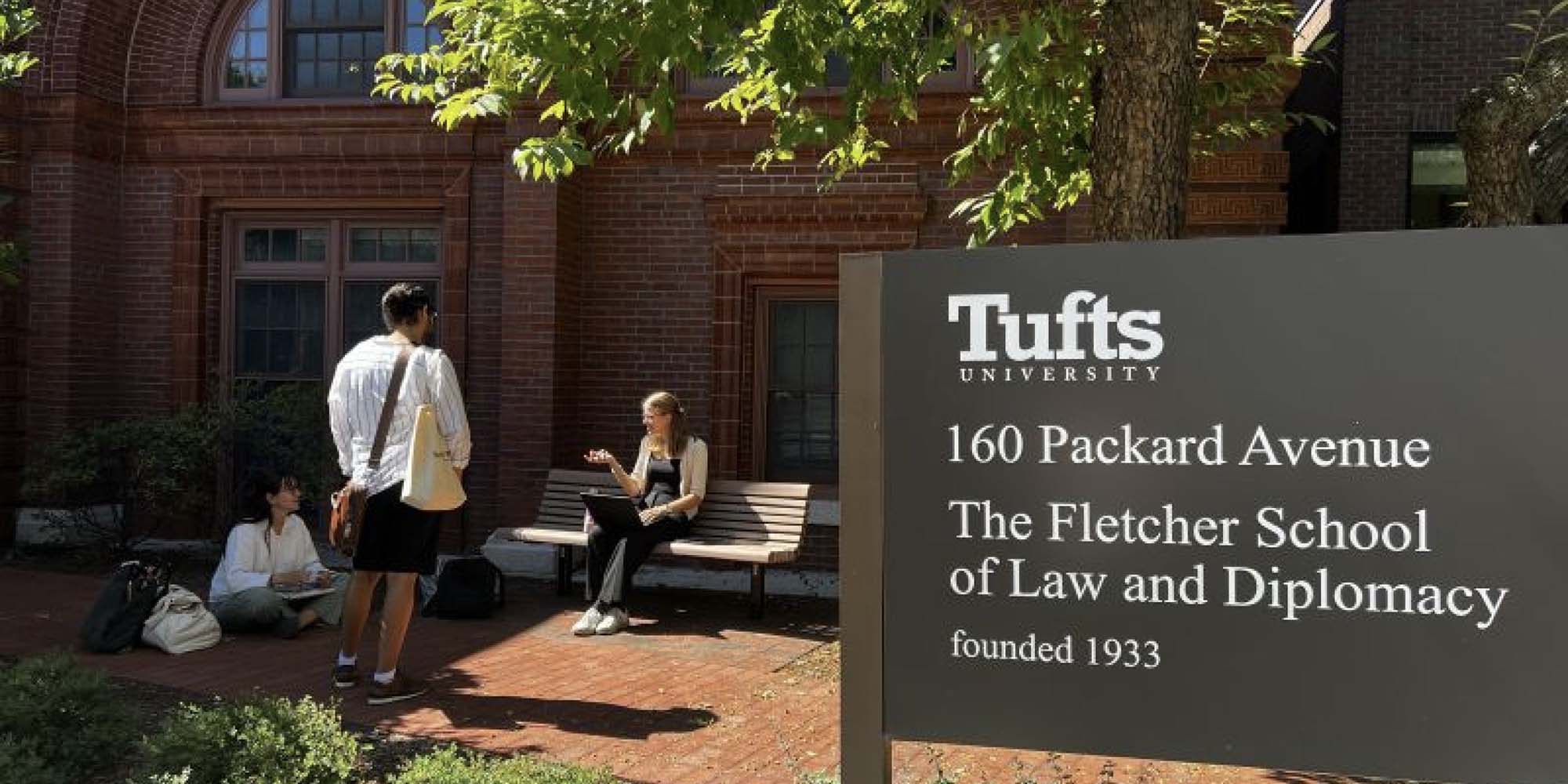
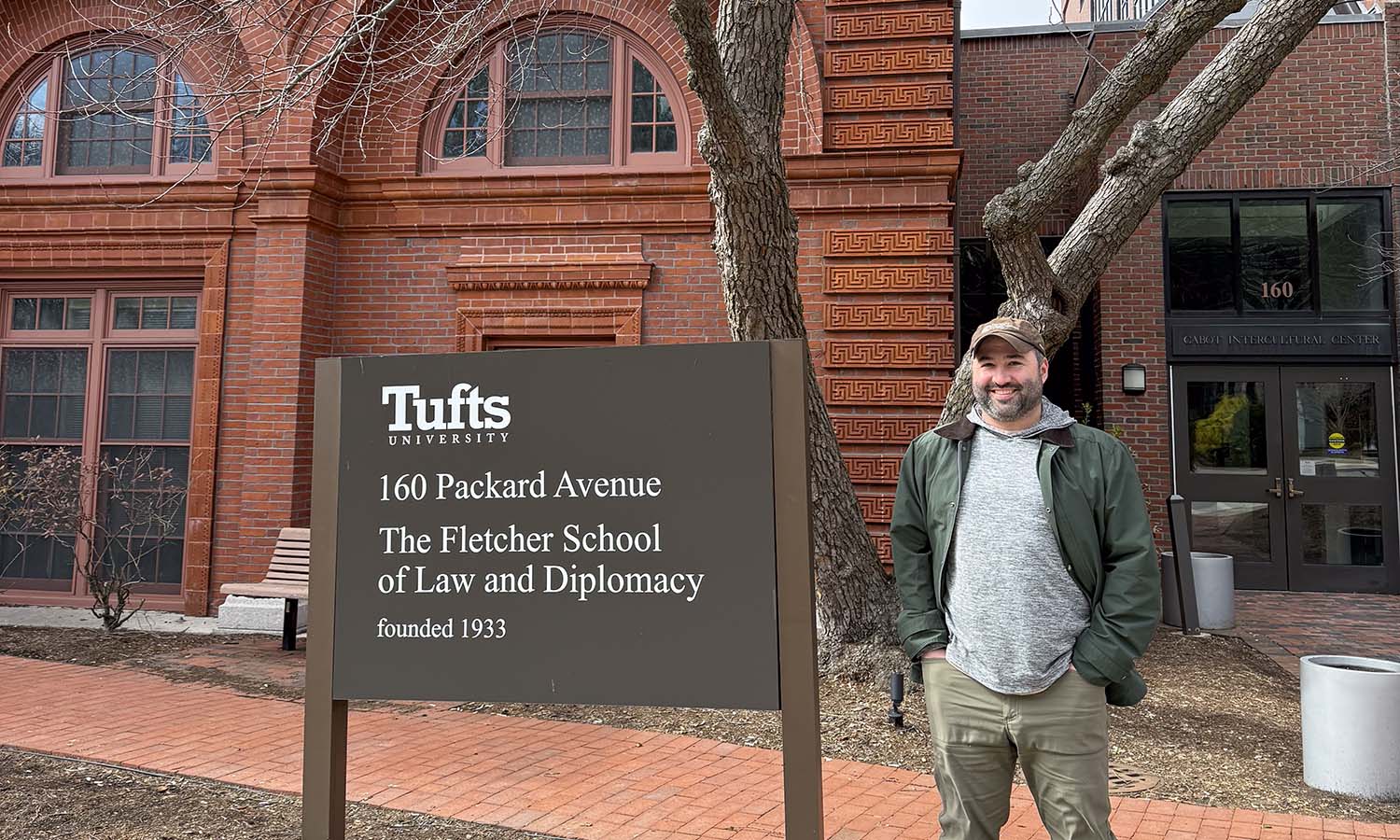
Founded in 1933, The Fletcher School is the United States’ oldest graduate school dedicated to international affairs. Its Master of Arts in International Affairs (MAIA), Master of International Business (MIB), and Master of Science in International Economics (MSIE) programs prepare students for careers across government, international organizations and the private sector.
Mercedes Wiegel ’25 completed her first year as a student in the Master of Arts in International Affairs program, where she studies global governance, international organizations, negotiations and conflict resolution.
Wiegel grew up in Amsterdam and graduated from HWS with a dual major in international relations and sociology.
“Fletcher’s program is a great way for students interested in international relations to take a wide variety of classes and engage with distinguished scholars in the international relations field to either figure out what within the field you are passionate about or to deepen your focus on a specific topic,” Wiegel says.
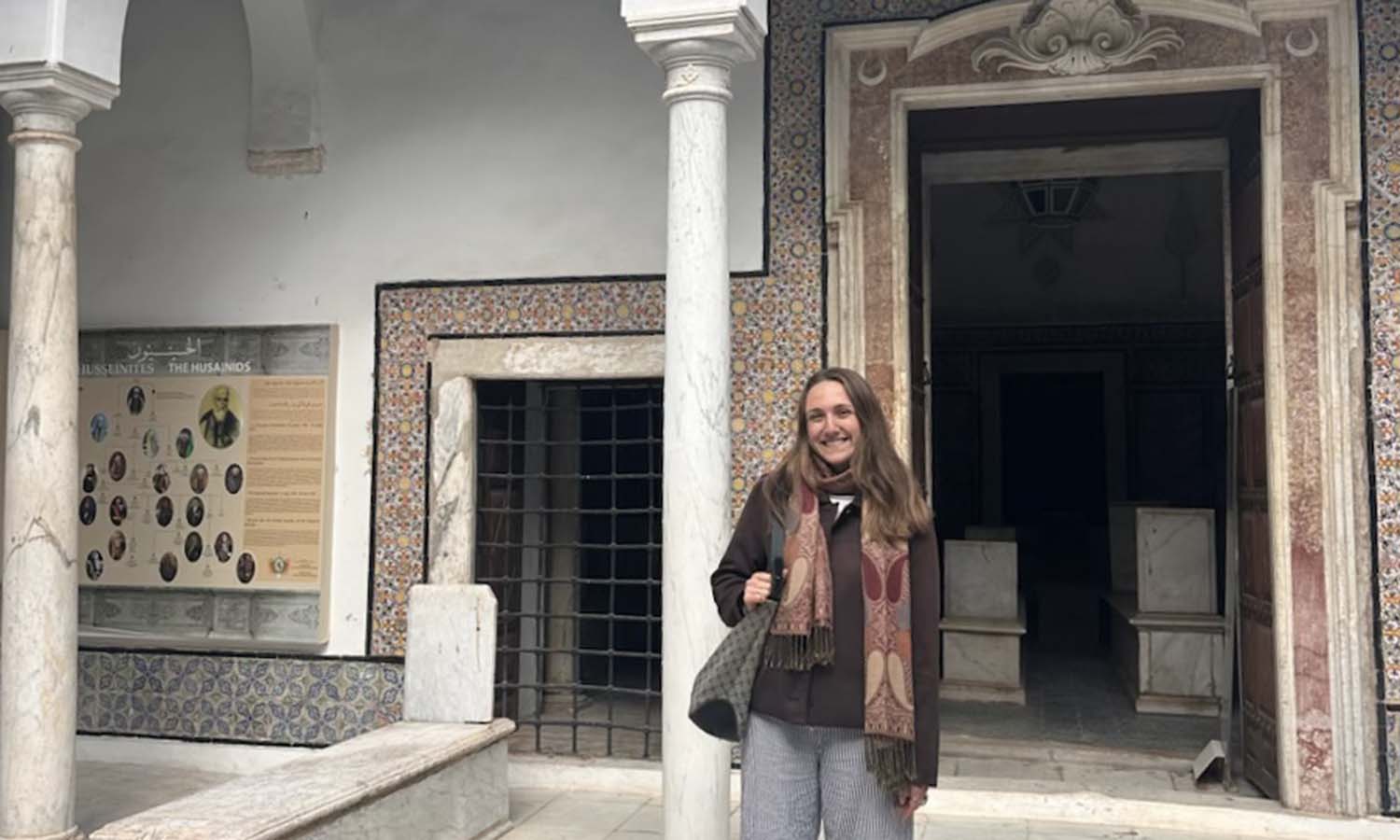
With an interest in the Middle East and North Africa, Wiegel spent her spring break on a student-organized trek in Tunisia with financial support from Fletcher.
“I had friends who were in Rwanda for another trek at the same time,” Wiegel says. “On these treks, students have meetings with the UN, U.S. embassy, local NGOs and research centers. We also went to some historical sites and engaged with locals and Fletcher alums in the country.”
Wiegel currently is spending her summer in Cairo, Egypt for intensive Arabic studies.
Back on campus in Medford, Mass., Wiegel works as managing web publication editor at Praxis: The Fletcher Journal of Human Security, a student-run academic journal highlighting student research and articles on humanitarianism, human rights, security and conflict resolution.
Wiegel says she chose Fletcher for the great things she heard from alumni, its wide-range of course offerings and opportunities through its specialized research centers focused on international affairs, law, security and policy.
“A two-year program also appealed to me over a one-year program, which probably is the biggest advice I would give to anyone deciding between different schools,” she adds.
The admissions pathway at Fletcher also eliminates the GRE requirement for applicants, regardless of their undergraduate institution, and offers students the security of knowing their next academic step while still in college.
The Map Your Future admissions offer is for up to two years, so students are then free — and expected — to pursue opportunities like Fulbright fellowships, Peace Corps service, or policy-relevant research positions or employment.
"This is such an attractive option because it eliminates one of the most challenging trade-offs that our students face,” says Philbrick Yadav. “Applying to the Peace Corps or Fulbright is the kind of undertaking that can seem more do-able to students when they are still here at HWS. We have a lot of on-campus support for the process, whether that’s a student’s academic advisor or someone in Career Services or events hosted by returned Peace Corps Volunteers.”
She continues: “This partnership with Fletcher offers the best of both worlds, allowing students to plan for the kind of graduate training that will support their medium-term career goals even while they pursue a more immediate service or research opportunity abroad. That combination was really appealing to us.”
Giorgi Bekauri ’25 was recently accepted to Fletcher after majoring in international relations at HWS, where his focus was security studies. At HWS, Bekauri studied abroad in Tbilisi, Georgia where he took classes in Russian and Georgian language, in addition to his studies in identity and conflict in the Caucasus Region.
At Fletcher, Bekauri plans to continue his work in security while expanding his knowledge in global politics — an interest he says he discovered through the Post-Globalism and Capitalism classes he took with International Relations Professor Vikash Yadav.
A U.S. Navy veteran who spent seven years as a medic before enrolling at HWS, Bekauri says Fletcher appealed to him for its emphasis on assembling cohorts with complementary perspectives. Students, he says, can learn as much from each other as they do their professors. “I was very much impressed every time I spoke to a representative at Fletcher where building that diverse group of perspectives is a very deliberate thing they do” Bekauri says. “I just kept thinking to myself, ‘This is a place I want to be part of.’”
He adds: “It just felt like it was a plug-and-play progression to my undergraduate experience.”
At HWS, international relations majors frequently pursue study abroad, internships and field-based research while exploring complex global challenges from multiple disciplinary perspectives.
Fletcher’s interdisciplinary curriculum similarly blends international law, diplomacy, economics, business, development and security studies. Students work within a collaborative, cohort-based environment that encourages close engagement with faculty and peers.
The program also offers flexibility for students pursuing international careers. While many students enroll after gaining professional experience, students may apply and begin graduate study immediately following their undergraduate degrees.
That's what Wiegel did. She says she feels happy to have found a great friend group in her first semester. “It’s a joy to go to class every day,” she says. “The Fletcher School is an amazing community of students ranging from different backgrounds and ages. From seasoned diplomats to military fellows, this multitude of experiences is what makes Fletcher a really unique place.”