HWS News
29 January 2026 • Faculty • STEM When the Birds Move Out
Historic bird specimens and 20 live quail are among the final items removed from Eaton Hall, linking the building’s closure to Professor Elon Howard Eaton and the future Fish Center for the Sciences.
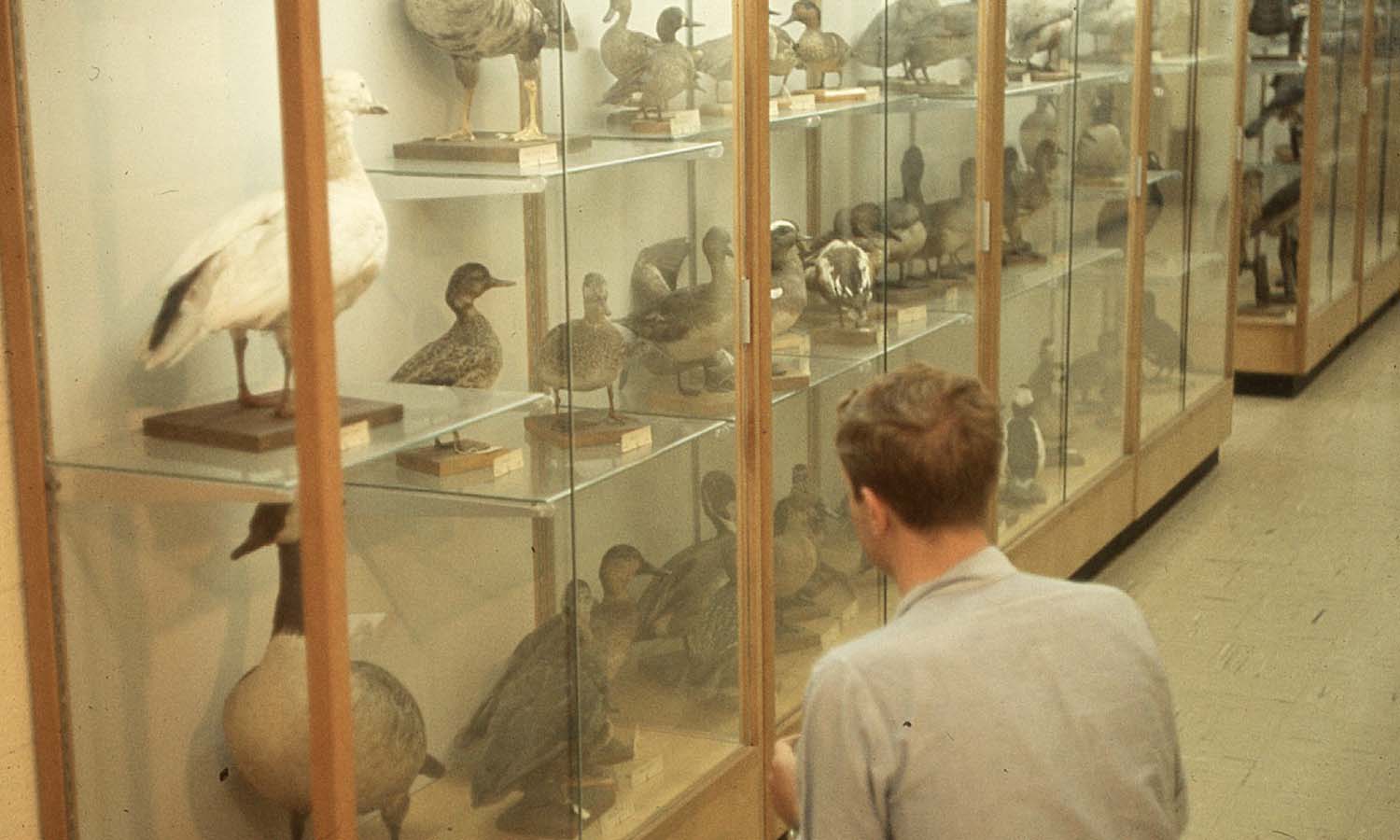
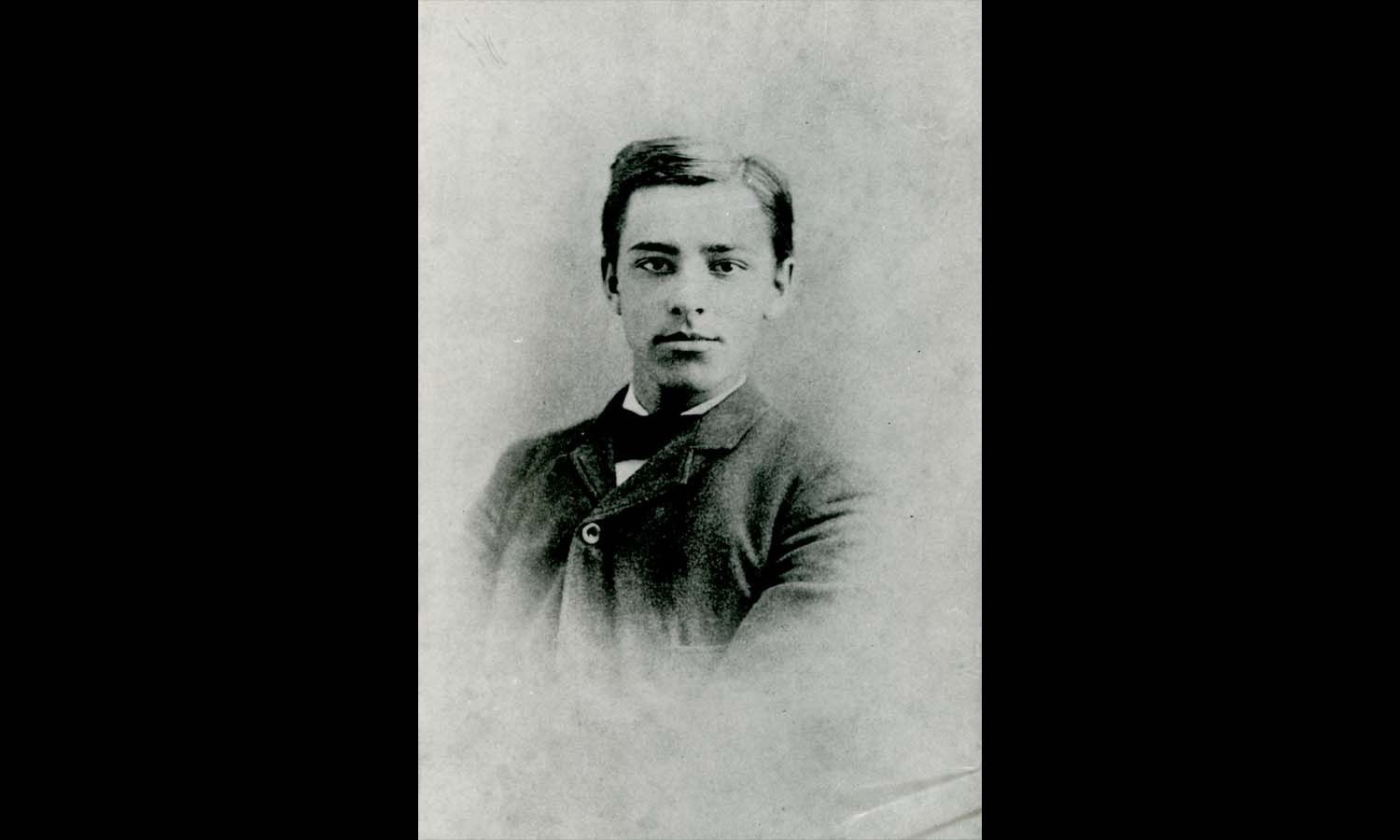
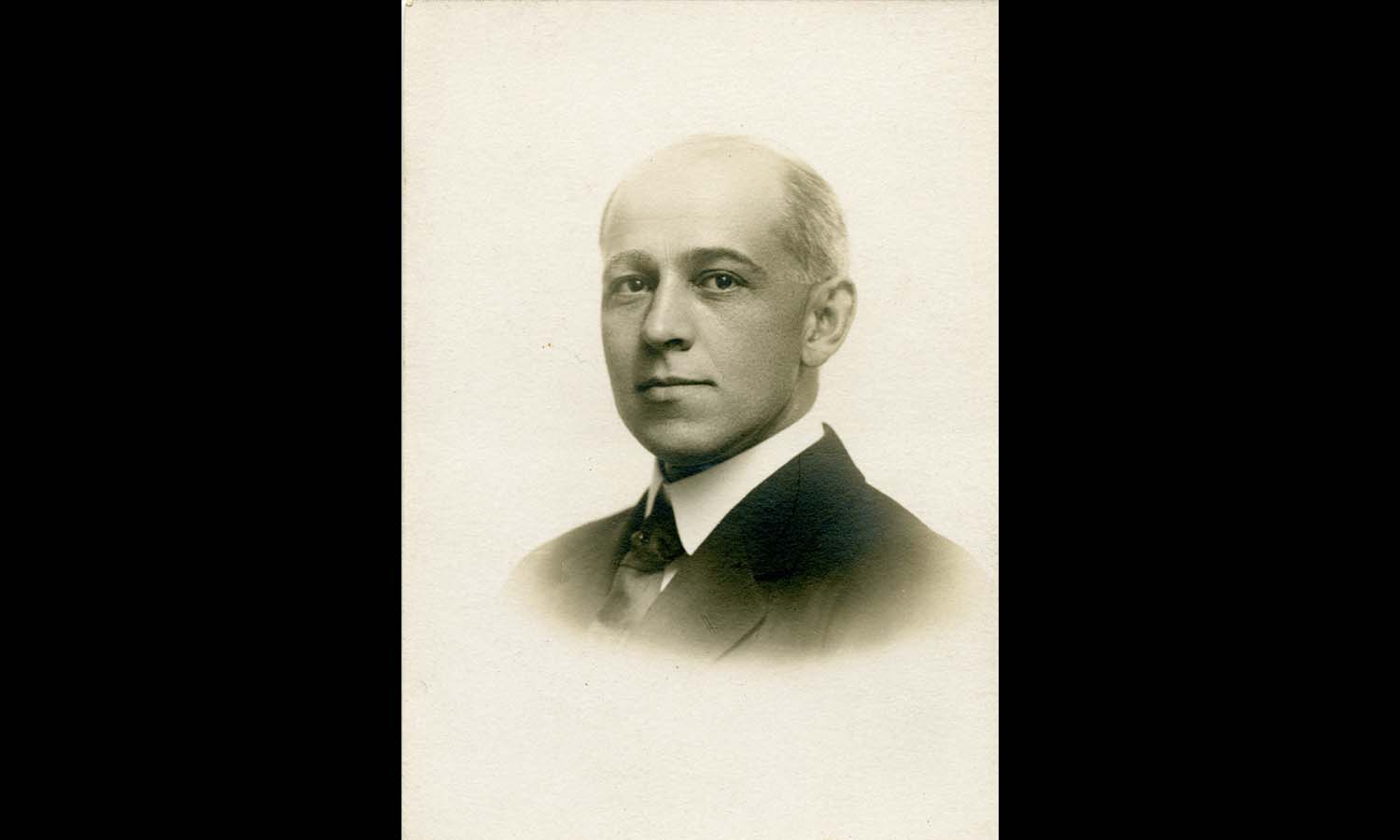
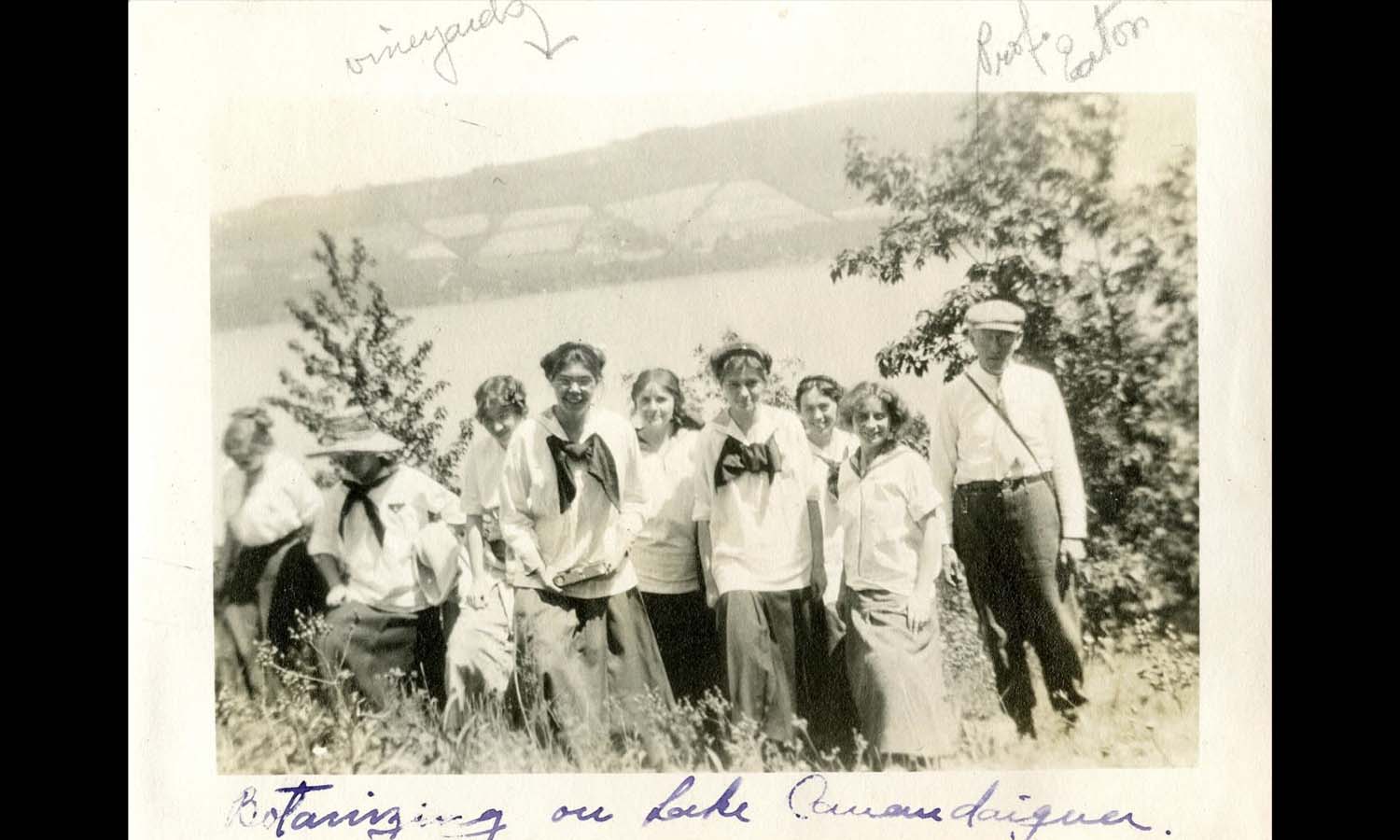
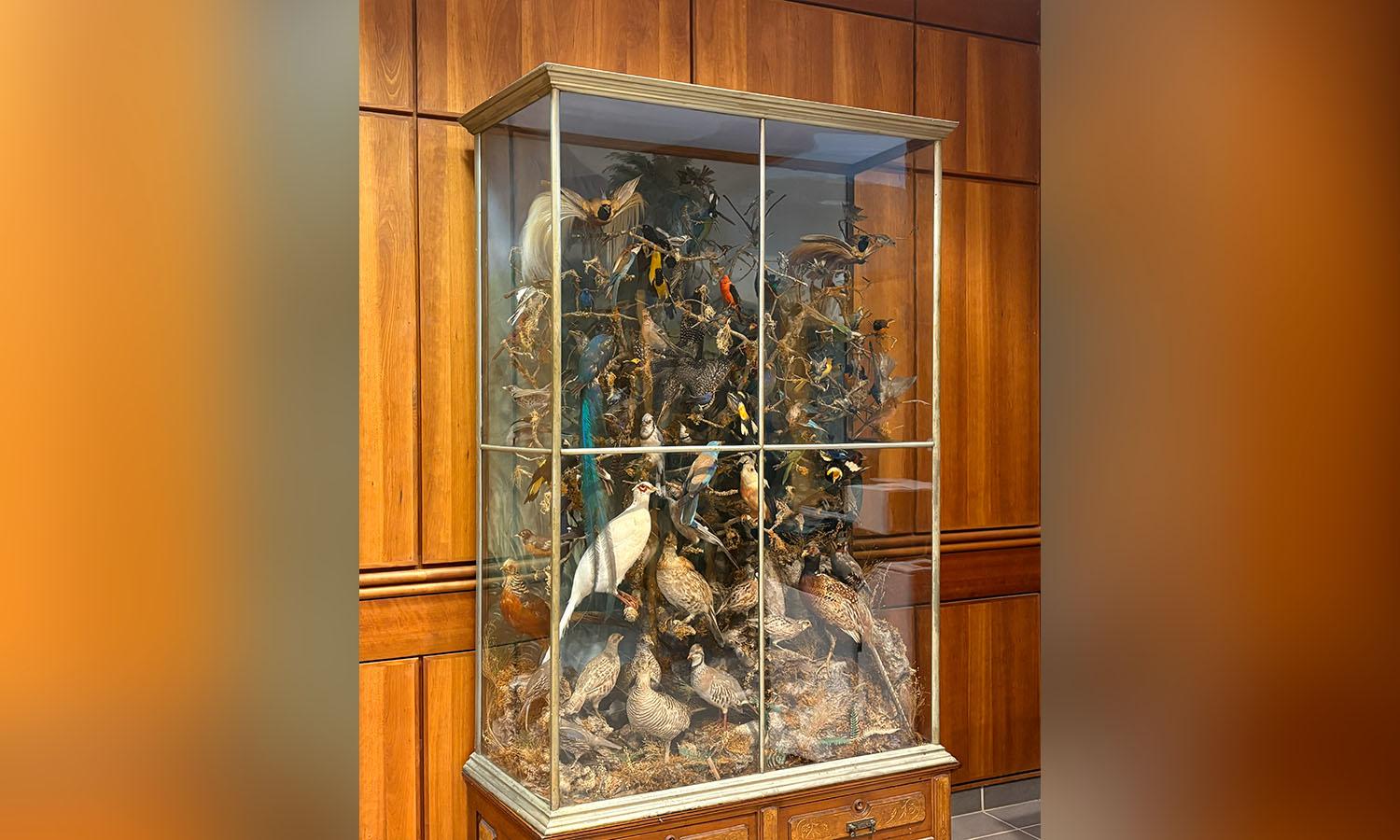
More than 160 of the 217 taxidermied birds housed in Eaton Hall were the last valuables to be boxed and moved from the science building before it closed in December. It’s fitting. The ornithological collection was started by the building’s namesake, Professor Elon Howard Eaton, who founded the HWS Biology Department in 1908.
Professor Eaton taught for 26 years, offering courses in biology, ornithology and hygiene, among others, and from 1908 to 1914 served as ornithologist for the New York State Museum.
“Eaton was a prominent New York State ornithologist who wrote the first account of New York birds,” explains Professor of Biology Mark Deutschlander, who consulted on moving the specimens and still uses some of them in his classes.
Deutschlander recalls an early-career visit to HWS with Eaton’s son, Steven Woodman Eaton, a St. Bonaventure University emeritus professor of biology and, like his father, a noted ornithologist. Steven Eaton died in 2017 at age 98, but during that visit he shared stories about the collection.
“The one I remember most was about a Cooper’s Hawk,” Deutschlander says. “They prey on smaller birds, and one, according to Steve, was pestering the songbirds at ‘old lady Durfee’s’ house on campus. Steve said his dad went over, shot the bird and added it to the collection — and helped out Mrs. Durfee.”
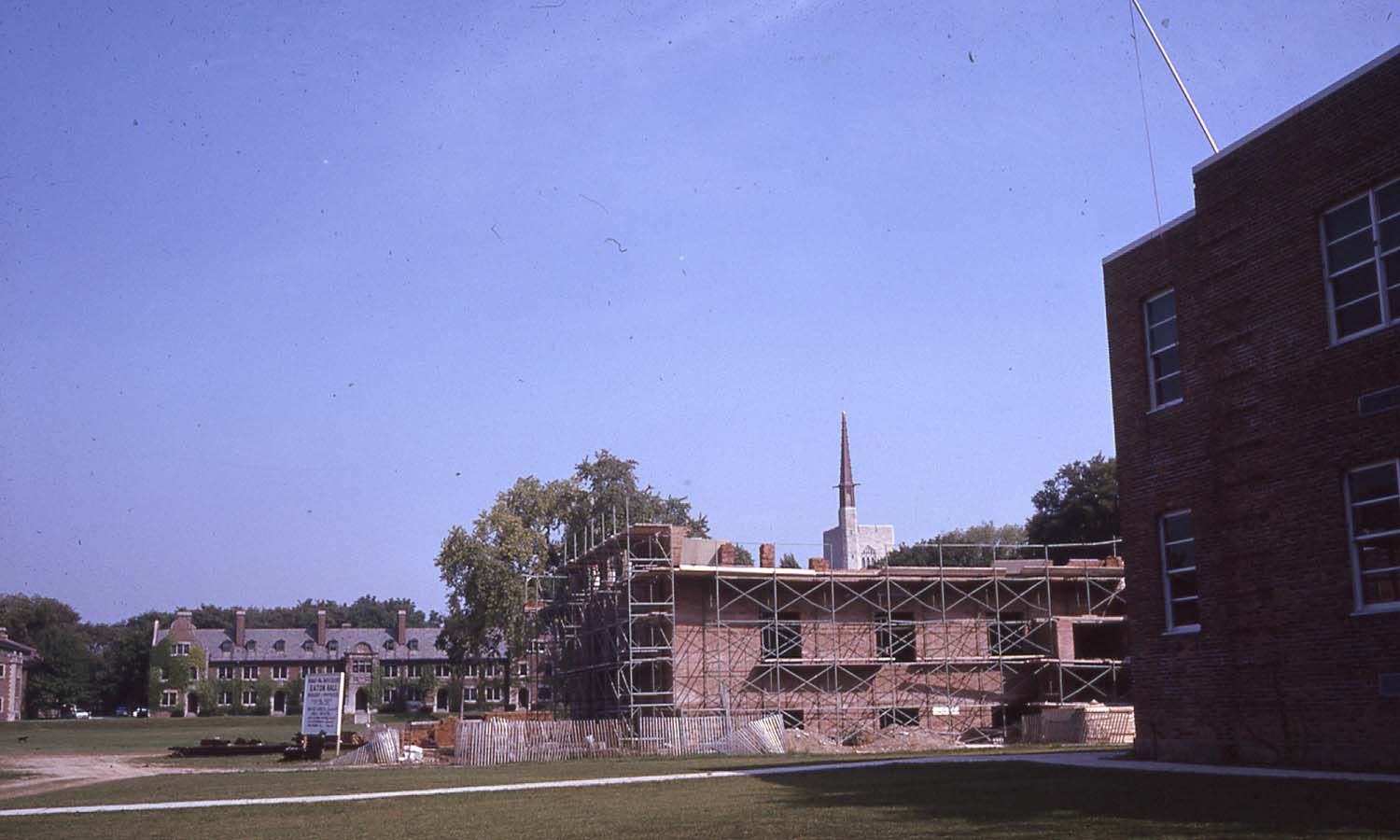
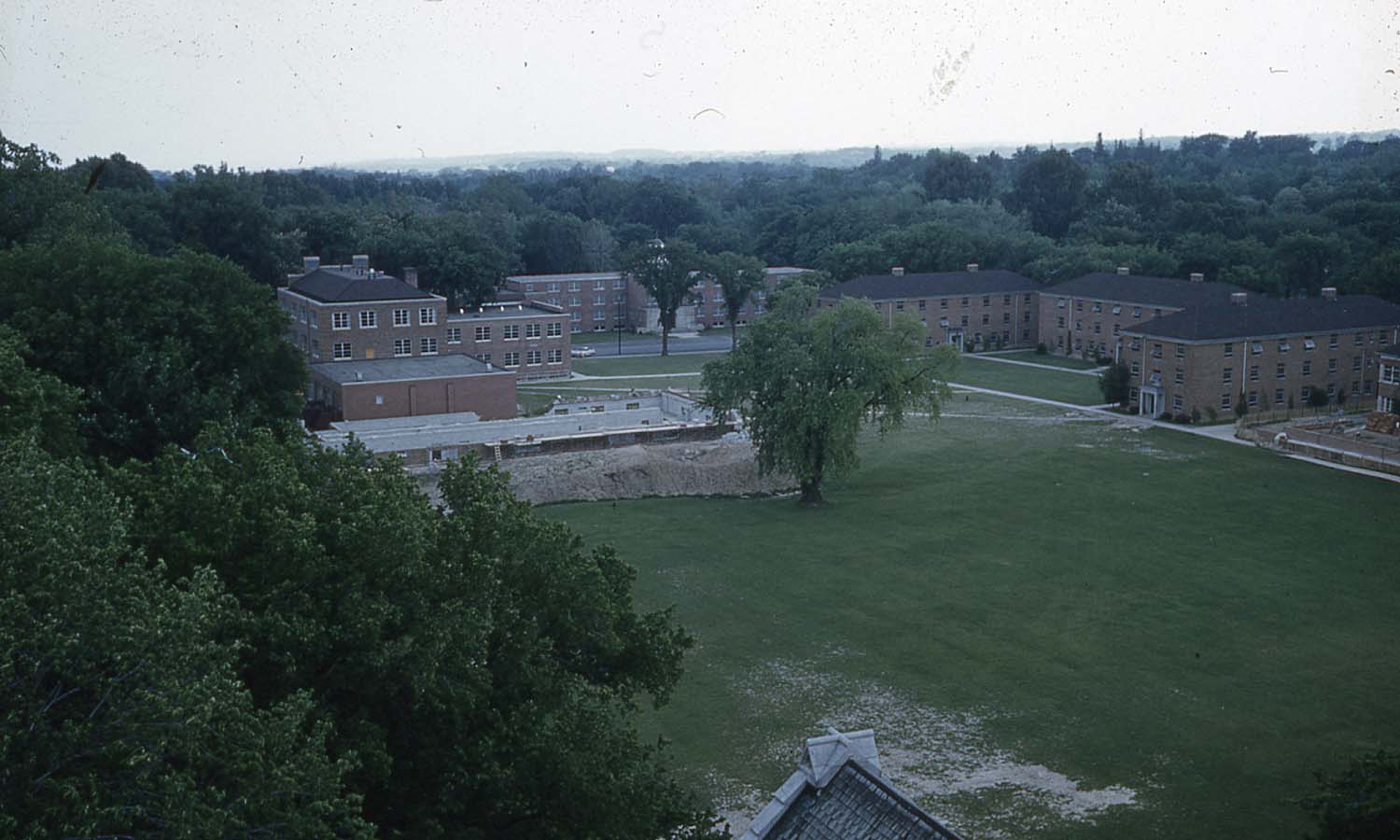
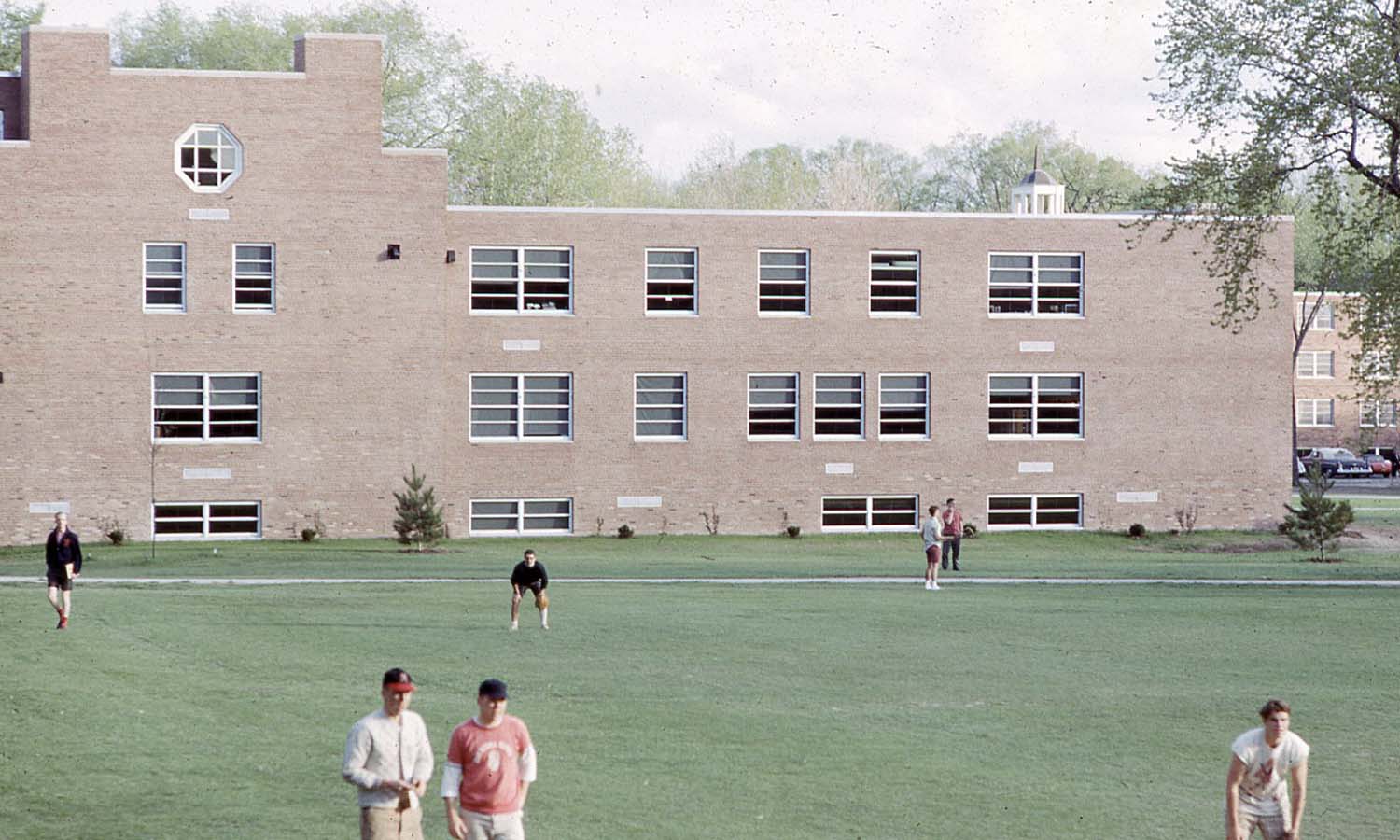
Eaton Hall was built in 1961, almost 30 years after Professor Eaton’s death. Now suffering from irreparable structural issues, Eaton Hall will be demolished over two weeks beginning in mid-February, following a period of abatement, to make way for construction of the Fish Center for the Sciences.
The new Fish Center will rise approximately 25 feet north of where Eaton now stands, with foundation work expected to begin in late March. When construction begins in earnest, the area surrounding the Science Quad will take on the look and feel of an active construction zone.
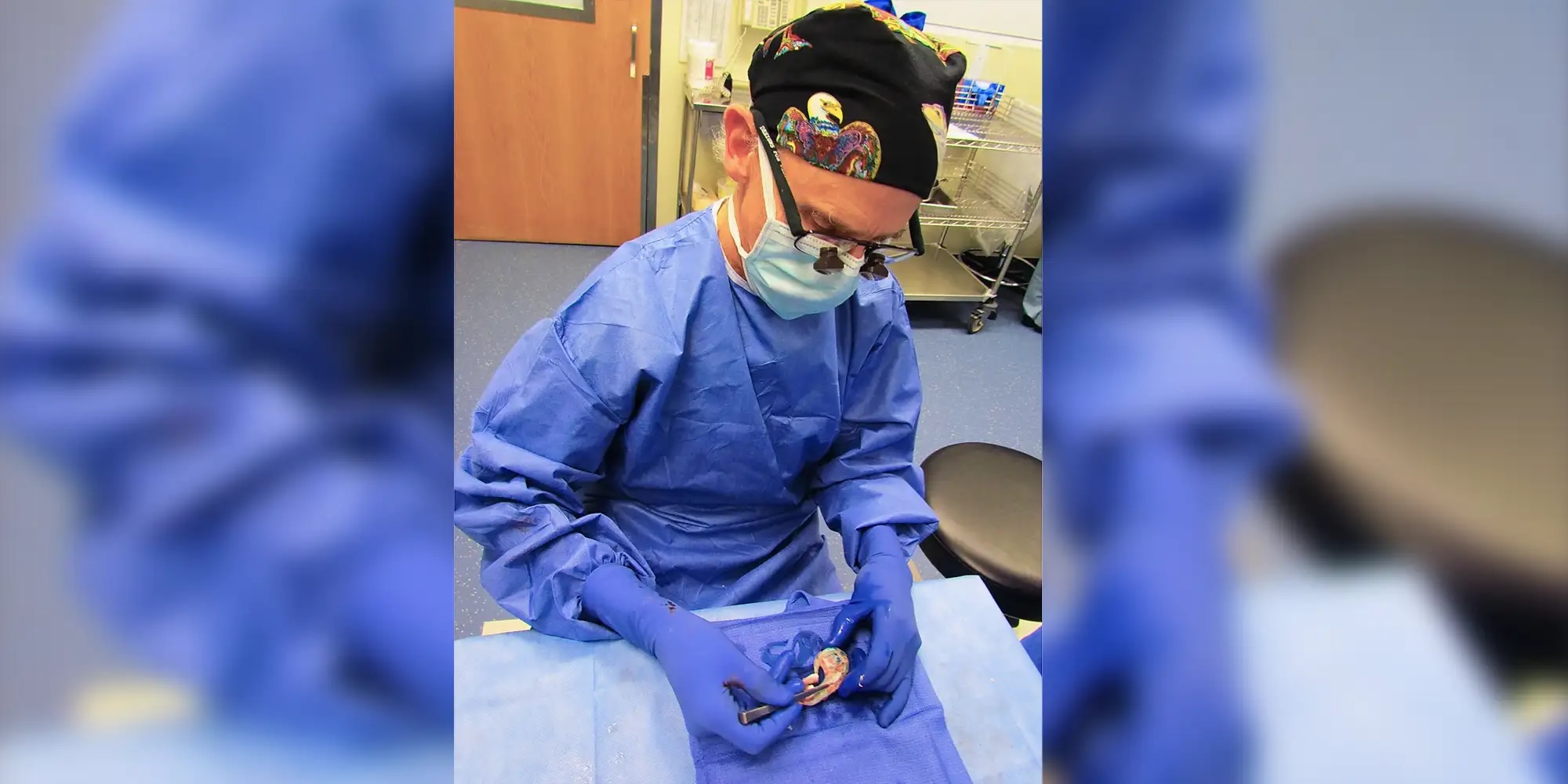
In preparation, over the past year, Eaton has been thoughtfully emptied. Three extinct passenger pigeons required extraordinary care, says Biology Department Animal and Plant Technician John Knouse, who has also overseen the transport and storage of 60 live frogs, more than 150 plants and approximately 20 live Coturnix quail, also known as Japanese quail.
They too required great care, he says.
“Birds love to wait until the very last minute to let you know anything’s wrong,” says Knouse, a veterinarian. As prey animals, they hide their illness. “It’s only late in the process that they’ll let you know they’re unhappy. They will often sit with their feathers puffed.
“If they bob their tail up and down, that’s usually an indication they’re having trouble breathing.”
Eaton Hall
To further complicate logistics, males cannot be housed together or they will fight. Knouse had to ensure they were caged separately while keeping them safe from drafts.
The Buildings and Grounds Department installed and insulated a small barn, and Knouse monitored the heated enclosure for days in advance to ensure it could maintain appropriate temperatures for the quail. On the day of relocation, movers warmed their vehicles to transport some 20 cages.
“We tried to move as quickly as possible on the warmest day possible to minimize any potential illness, and luckily we had no issues,” Knouse says. “It went very well. The birds are very happy in their new enclosure. It wouldn’t have come together without the help of Buildings and Grounds and [Professor of Geoscience and Associate Provost] Nick Metz.”
Countless instruments and pieces of equipment have also been removed from Eaton. During the summer, Nina Lopes ’28 and Duncan Kipkoech ’28 pulled vintage laboratory equipment from Eaton’s cabinets and storerooms, documenting and researching the relics for a digital archive.
Much of the equipment they uncovered reflects decades of physics instruction — mechanics, electronics, optics and thermodynamics — tracing the evolution of teaching and research on campus.
At nearly 40,000 square feet, the new integrated science center will be built adjacent to Rosenberg Hall and draw architectural inspiration from Coxe, Medbery and Williams halls.
As Eaton emptied, renovations across the Science Quad continued in anticipation of both the Fish Center and the loss of Eaton’s classrooms.
Gulick Hall Changes
In Gulick Hall, substantial work was completed over the summer. Psychological Science now occupies the first floor, with offices located in the former Human Resources suite. Meanwhile, Human Resources has relocated to the former Environmental Studies house at 451 Pulteney St., while Environmental Studies is now housed in Lansing and Rosenberg Halls.
The second floor of Gulick added five lab, conference and breakout spaces and houses all Math, Computer Science and Physics department offices.
New and renovated classrooms in Gulick, completed over the summer, have been in use since the fall semester. Within the next few months, newly created student–faculty collaborative space and student workspace will open on the second floor.
As the campus moves into the spring semester, first- and second-floor hallways in Gulick will be refreshed with new bulletin boards, art and displays, along with updated room signage. Gulick 100 will also receive a refresh, including new finishes, upgraded technology and larger teaching screens.
Lansing Hall Changes
In Lansing, a former chemistry laboratory was converted into two teaching classrooms. Biology faculty and staff previously housed in Eaton Hall will temporarily occupy third-floor offices in Lansing for the next two years as construction is completed on the Fish Center. To help offset the loss of Eaton’s instructional space, additional classrooms were constructed in Demarest Hall.
Rosenberg Hall Changes
Work has also been completed in the basement of Rosenberg Hall, where renovations include three permanent Physics teaching labs that will be online for the spring 2026 semester, along with prep space, storage and student areas. The Nuclear Magnetic Resonance (NMR) instrument, housed in Rosenberg, will be replaced in the spring.
Displayed on the second floor of Rosenberg are some of Eaton’s century-old taxidermied birds. Those moved more recently, Knouse says, will remain in temporary storage until a permanent location is determined.
Classes continued in Eaton through the fall semester even as efforts to empty the building intensified. Now that students are gone for winter break, the birds have also left the building.
As much care will be given to creating a designated space to honor Professor Eaton and the building that bears his name as there was in relocating its collections, animals and equipment. Thoughtful planning underscores the continuity between the sciences’ past and future — one that will soon take shape in the Fish Center for the Sciences.
Top: A renowned ornithologist, Elon Howard Eaton P'37 amassed a meticulous collection of birds between 1880 and 1933. The collection originally included extinct species such as the ivory-billed woodpecker and Carolina parakeet.