HWS News
16 April 2026 A Diplomat for a Defining Moment
U.S. Ambassador R. Nicholas Burns brings decades of global leadership — and rare insight on Iran and China — to the Anderton Forum on April 28.
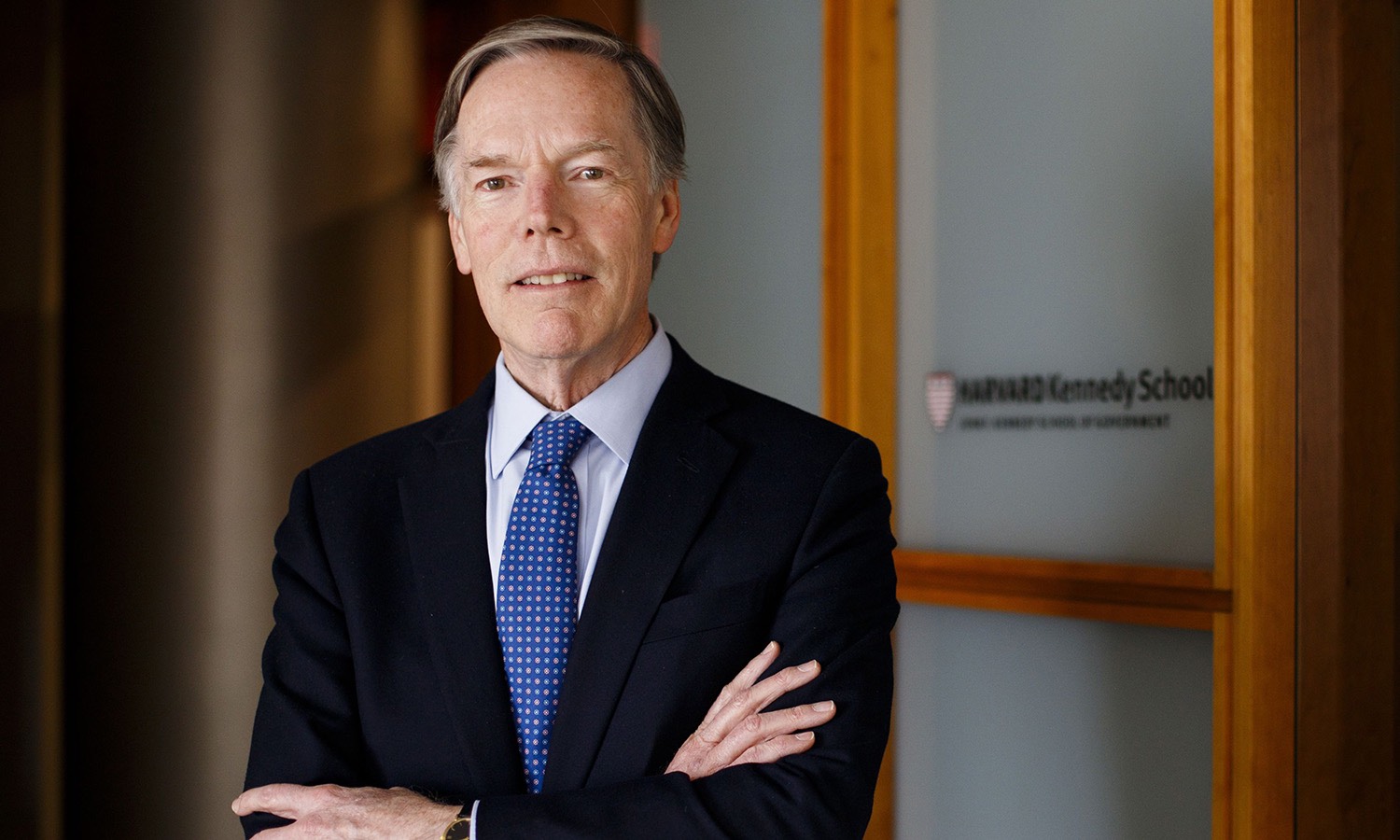
Few people better understand the high stakes of U.S. foreign policy today than Ambassador R. Nicholas Burns.
As former Under Secretary of State for Political Affairs — the State Department’s third-ranking post — Burns led U.S. negotiations on Iran’s nuclear program. He negotiated a long-term military assistance agreement with Israel and spent years leading critical negotiations on the U.S.–India Civil Nuclear Agreement.
In the U.S. Foreign Service, where he served as U.S. Ambassador to the North Atlantic Treaty Organization from 2001 to 2005, Burns has spent a lifetime working on complex global issues but perhaps none so difficult, he says, as China, where he served as U.S. Ambassador from 2021 to 2025.
Burns will serve as keynote speaker for the fourth annual Anderton Forum for Global Engagement on Tuesday, April 28, at 7 p.m. in the Vandervort Room of the Scandling Campus Center. The event is free and open to the public.
With more than 40 years of experience shaping U.S. foreign policy across diverse regions and crises, Burns began his career in the U.S. Foreign Service in 1980, serving in six countries including Greece, Israel and Egypt. His breadth of experience — from Cold War diplomacy to contemporary power rivalries — now converges at a moment of escalating tensions with Iran.
When HWS invited Burns to give the event’s keynote address, forum organizers could not have foreseen the timeliness of his visit, Professor and Chair of International Relations Department Stacey Philbrick Yadav says.
“We invited Burns based on his body of work as a career diplomat and public servant — most recently serving as U.S. Ambassador to China,” she says. “But in the months since the invitation was finalized, global events have developed at a pace that make the choice seem prescient.”
As the former ambassador to NATO, where Burns led the expansion of NATO missions into Afghanistan and Iraq post-9/11, Burns is extraordinarily positioned to shed light on the conflicts the U.S. faces today.
“As a nation, we find ourselves in the midst of a rapidly changing international landscape, with our own government functioning as the primary disruptor,” Professor of International Relations and Co-Chair of Africana Studies Kevin Dunn says.
“Ambassador Burns’ career in the State Department — in which he served multiple presidents from both parties — particularly his recent tenure as U.S. Ambassador to China, makes him an ideal guide for helping us understand the importance of our current moment in global affairs: both the enormity of the challenges and the gravity of the stakes,” Dunn adds.
As Ambassador to China, Burns helped stabilize relations with Beijing while competing with China on military, technology, economic and human rights issues. Since his return last year, he has called it one of his most challenging and worthwhile assignments.
In preparation for the visit, students in INRL 180: “Introduction to International Relations” have spent the semester applying IR theories to examine how Australia, India, Japan and the U.S. are working together to provide security, especially at flashpoints in the Indian Ocean and South China Sea, explains Professor of International Relations Vikash Yadav. “It’s an honor for HWS to have Burns speak to faculty and students,” he says.
“Ambassador Burns' experience with China in particular, and Asia more broadly, offers our students a chance to learn from an insider's perspective about the geopolitical and geoeconomic dimensions of the defining challenge of the 21stcentury," Yadav says.
Yadav was awarded a faculty development grant tied to the Anderton Forum. As part of the grant, he is using a strategy game to get students to think differently about geopolitics.
“The game focuses on security scenarios situated in Taiwan, Luzon, Okinawa/Ryukyus and the Malacca Strait,” Yadav explains. “We want our students to ask Ambassador Burns informed questions about the future of security provision in the Indo-Pacific, particularly in the context of declining American political hegemony.”
At Harvard University’s Kennedy School of Government, Burns teaches Negotiation and Diplomacy, examining some of the greatest negotiators in recent history: how they use diplomacy, economic and military pressure to overcome barriers to agreement.
Outside of Harvard, Burns is vice chairman of the Cohen Group and co-chair of the Aspen Strategy Group and Aspen Security Forum. He is a member of the American Academy of Arts and Sciences, the Council on Foreign Relations and the Massachusetts Historical Society.
Over his career, Burns has received 15 honorary degrees. He has a bachelor’s degree in History from Boston College, a master’s degree in International Relations from the Johns Hopkins School of Advanced International Studies and a Certificat Pratique de Langue Française from the University of Paris-Sorbonne.
Established in 2022 by former Trustee James F. Anderton IV ’65, the Anderton Forum for Global Engagement brings leading experts to campus to share their insights and experiences on pressing global issues. The forum fosters dialogue and intellectual exchange, encouraging the HWS community to broaden perspectives on international relations. Past keynote speakers have included former U.S. Ambassador to Ukraine Marie Yovanovitch and international peacebuilding practitioner Séverine Autesserre.