HWS News
24 September 2026 • Faculty • Sustainability A Legacy on Two Wheels
After seeing a need for sustainable transportation at HWS, Tarang Malhotra ’26 built a bike-sharing program designed to keep rolling long after he graduated.
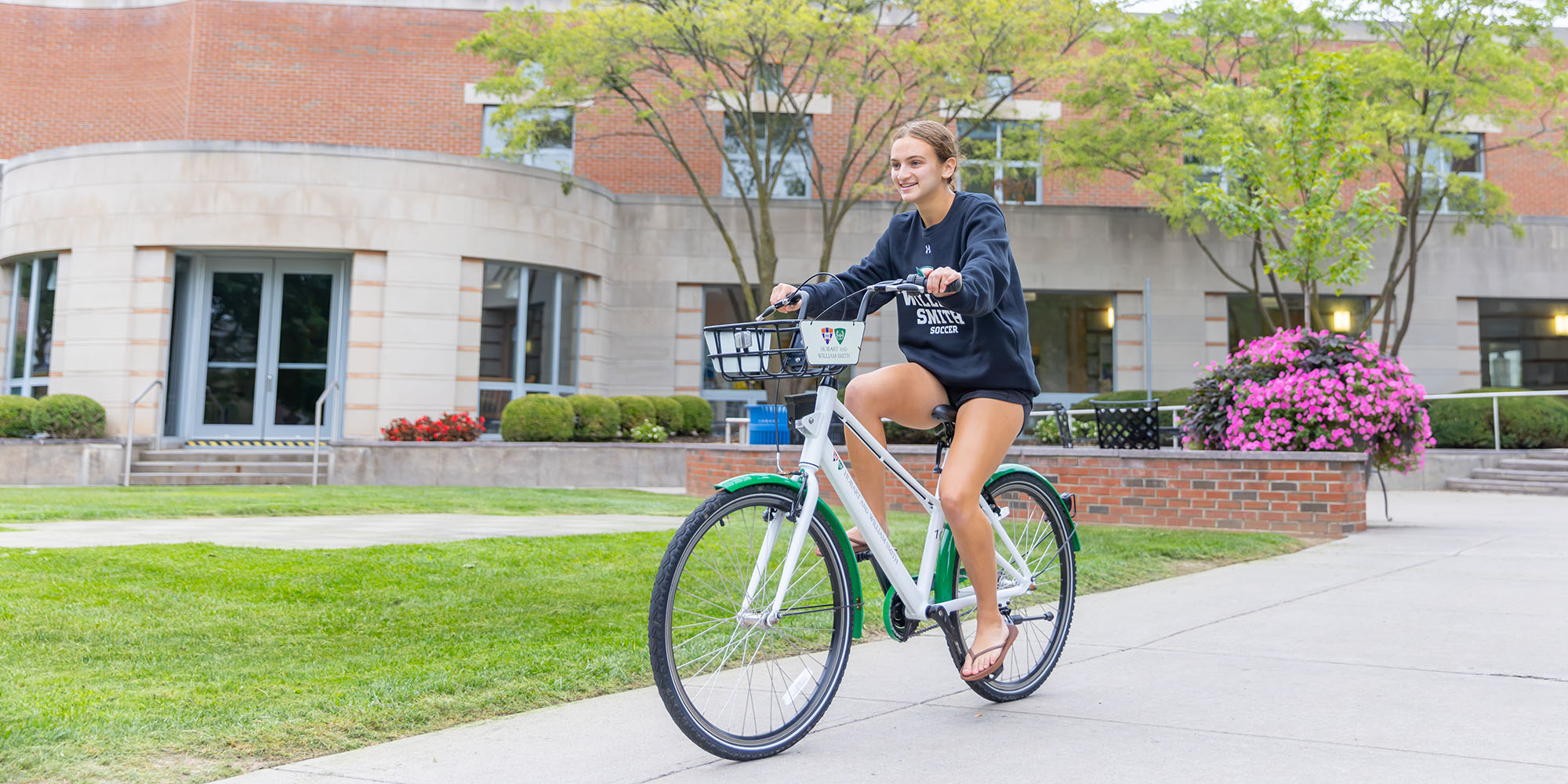
Halfway through an interview with Professor of Business Management and Entrepreneurship Tom Drennen about Tarang Malhotra ’26 and the bike-sharing program Malhotra started on campus two years ago, a BikeHWS bicycle rolls past.
Then another.
“There goes the second bike since we started talking,” Drennen says.
For Malhotra, who graduated in May and now works in New York City as an analyst at PEI Global Partners, a private investment bank specializing in power and infrastructure, those passing bicycles represent exactly what he envisioned in early 2024 when he began the project: a sustainability legacy that would live on without him.
“I wasn’t going to be at HWS forever,” Malhotra says. “It wasn’t one of those things that I wanted to see completely die once the student who implements the project graduates.”
This month that persistence earned Malhotra recognition at the Global Sustainability Awards.
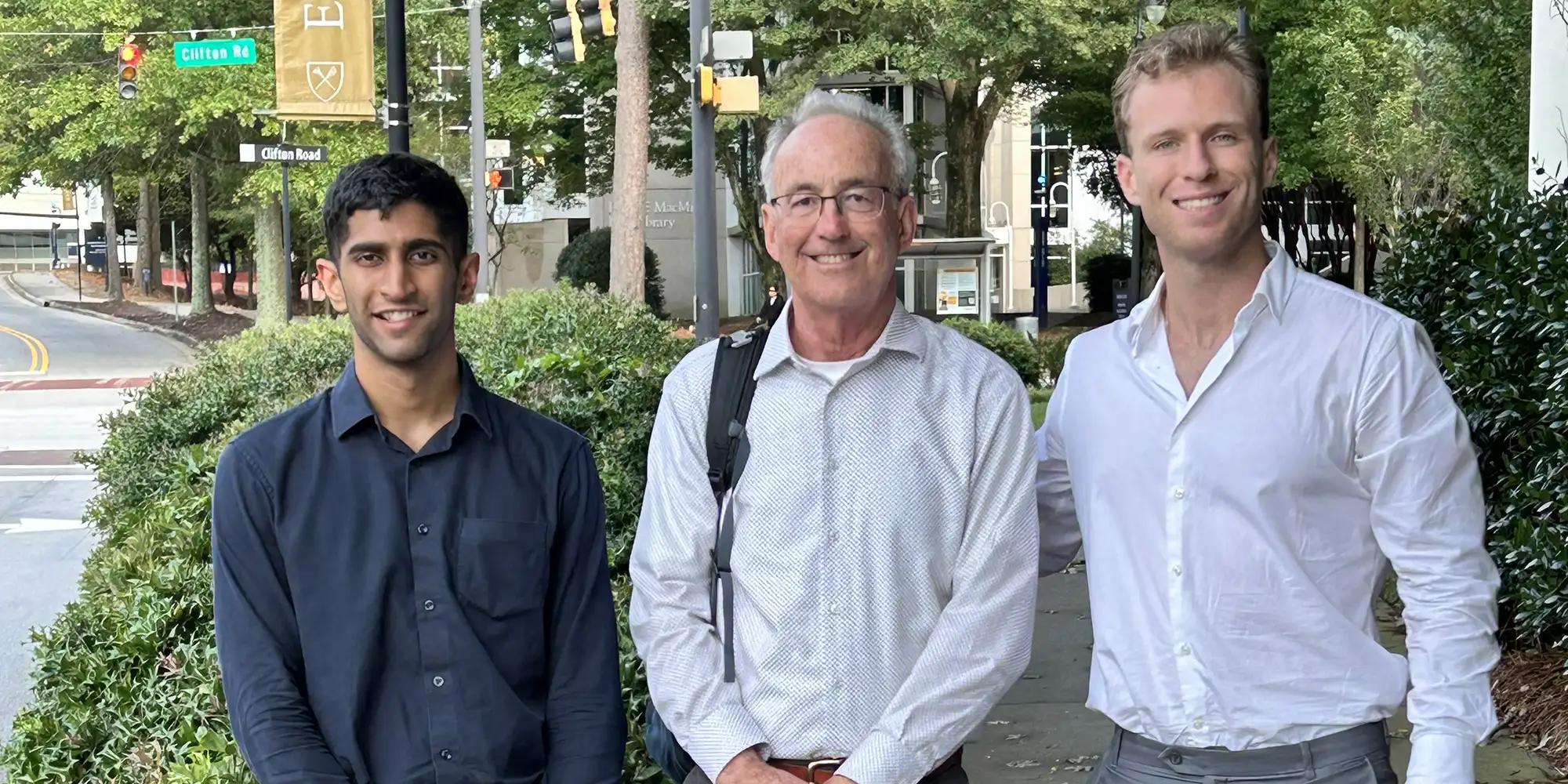
On Sept. 12, he and Drennen were among the honorees for their work advancing the United Nations Sustainable Development Goals (SDGs). Held in Atlanta, Ga. at Emory University's Goizueta Business School, the Global Sustainability Awards recognized Malhotra as the SDG 7 Winner for Affordable and Clean Energy for establishing BikeHWS and Drennen as the SDG Super Educator (Pewter) winner — the top honor in the educator category.
Drennen’s award was for his sustainability work, including his efforts to help HWS achieve carbon neutrality in 2024.
9/24/2026
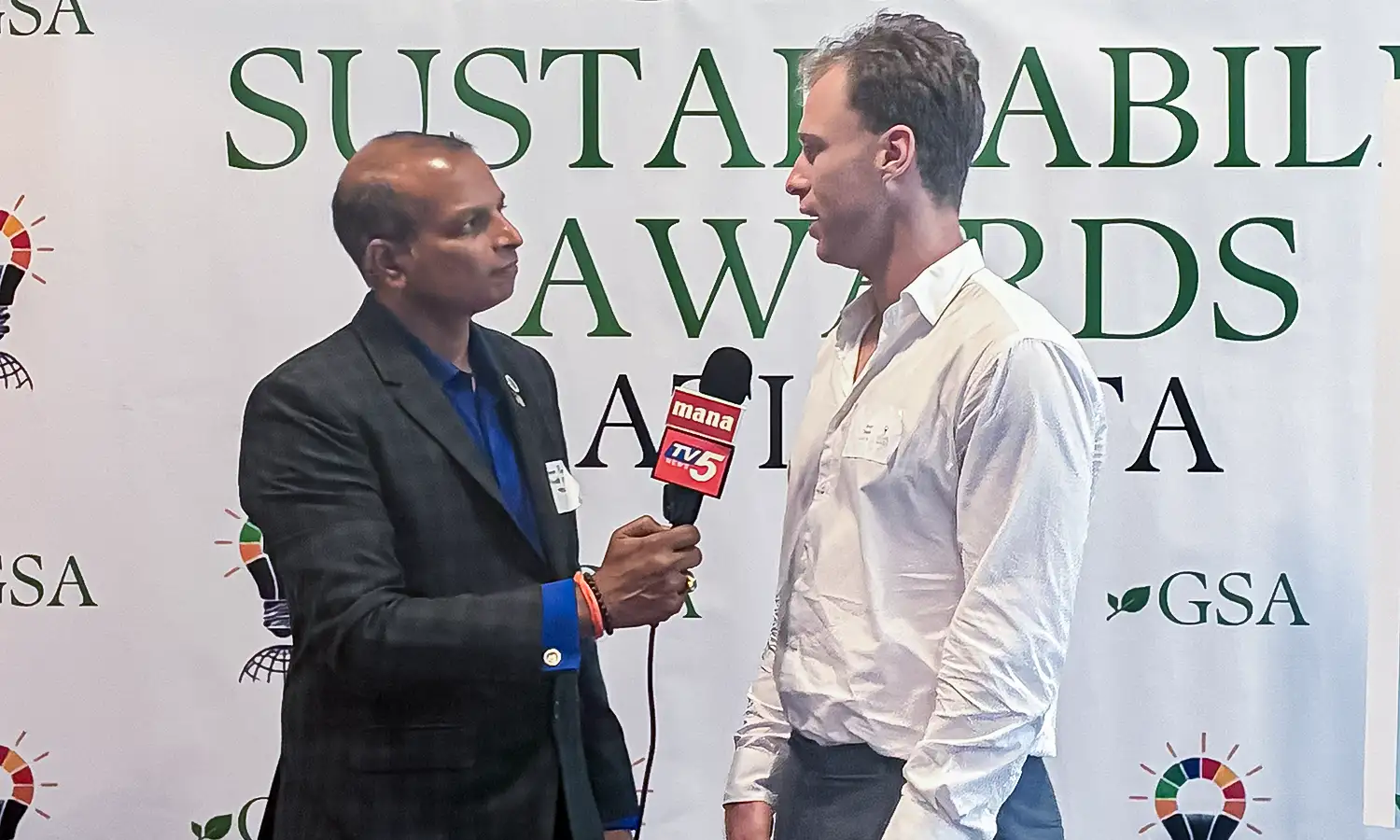
Sean Pesin ’24, now pursuing a Master of Environmental Management at Duke University’s Nicholas School of the Environment (and Malhotra's former Hobart tennis teammate), was also present as a featured speaker.
“Professor Tom Drennen up there in the back, thank you for getting me into the sustainability field,” Pesin called out during his presentation. “I guess this goes to show that a single class, ‘Natural Resource and Energy Economics’ — I will never forget it — kicked off my entire sustainability journey.” (For a link to Pesin's speech, click here.)
The economics and psychology major spoke about the people and opportunities shaping his path and his work at Duke, including a year-long project supporting a fair and inclusive energy transition in India as coal facilities are gradually phased down.
“Our work consists of examining how communities and workers can be supported throughout the transition, with an emphasis on preserving jobs and economic opportunities while also advancing environmental and sustainability goals,” Pesin explains.
Most recently, Pesin worked on the Dispatch Operations team at energy technology company Voltus, supporting 21 emergency demand-response events in which commercial and industrial customers reduced electricity use to help stabilize the grid during peak periods.
After graduation, Pesin hopes to work in electric grid reliability and modernization.
For Malhotra, an economics and environmental studies double major, the path to BikeHWS started with an observation in fall 2023 during a semester abroad. A lifelong cyclist, Malhotra was pleased to see bike sharing integrated in German daily life.
But when he returned to HWS, he says, “It really bothered me how much car use there was on campus. I thought that could be easily avoided.”
The following spring, between his classes and internship, Malhotra brought the idea of updating earlier bike-sharing efforts to Drennen, who had been involved in a bike program on campus years before. Known as the Yellow Bike Project, the student government program let students rent bikes.
Malhotra wanted a free program that would let students share bikes instead.
He researched bike sharing at other colleges, found On Bike Share, a company that provides bike-sharing systems for college campuses, identified the bicycles he wanted and began working through the logistics.
Drennen had doubts.
“Tarang took the initiative to find a vendor who would actually sell us a system for a small school; he figured out all the bikes, how to get them painted the way we wanted, with the colors we wanted.
“I was dubious that it would happen,” Drennen says, noting the complexity of working with vendors. “And he pulled it off.”
Drennen says experience has taught him to keep doubts to himself when students bring him ambitious ideas.
“I never show my skepticism,” he says.
With Malhotra, that meant pointing to the next obstacle and letting him solve it: Find a company. Get a quote. Develop the proposal. Figure out who to approach next.
The biggest obstacle was money.
Malhotra shared the project with student government, student engagement and other offices in a series of meetings that he says “kind of felt like business pitches.”
Eventually, he presented the idea to Vice President for Campus Life and Dean of Students Becca Morris.
“We love when students come to us with ideas to not just make a temporary change to campus, but embed a long-term improvement initiative,” Morris says. “Tarang did just that.”
Morris connected the proposal with the Presidential Discretionary Fund for Student Support, established by Sana Naylor Brooks ’89 and her husband Andrew M. Brooks. It provided funding for the bicycles, the app used by students to reserve them and the infrastructure needed to operate the program.
Malhotra assembled all 20 bikes himself and initially handled their maintenance before working with Campus Life to manage the project long-term.
“Tarang didn’t just start the program and hand it off,” Morris says. “He worked with us for a year to ensure a successful transition.”
Today, Director of Student Activities and Greek Life Ryan Steinberg manages the fleet of 20 bicycles stationed around campus. Using an app, students locate and check out bikes at no charge.
“They’re almost always regularly out in use,” Steinberg says.
The irritation Malhotra originally felt when he saw students drive when they could bike instead was similar to the frustration that ignited Drennen’s own passion for sustainability.
It happened, he says, on his first trip to Niagara Falls.
“There was an acrid smell and all this foam,” Drennen remembers. “It was so polluted at that point, and that just really hit me as a 10-year-old. Like, what were we doing?”
That question has continued to drive him in the years since, especially across Drennen’s efforts guiding HWS toward the carbon-neutrality commitment it made in 2007 and achieved a year ahead of schedule in 2024, and in his work with students to develop their own ideas for addressing environmental problems.
Today, Malhotra still rides shared bikes. Living in New York City, Malhotra occasionally uses Citi Bike — one of the systems that helped inform his vision for BikeHWS.
Meanwhile, back on campus, the program he spent nearly two years planning, pitching, assembling and handing off keeps moving.
As Drennen describes Malhotra’s efforts, he observes yet another BikeHWS rider roll by his window. “Oh!” he says, “There goes a third one.”
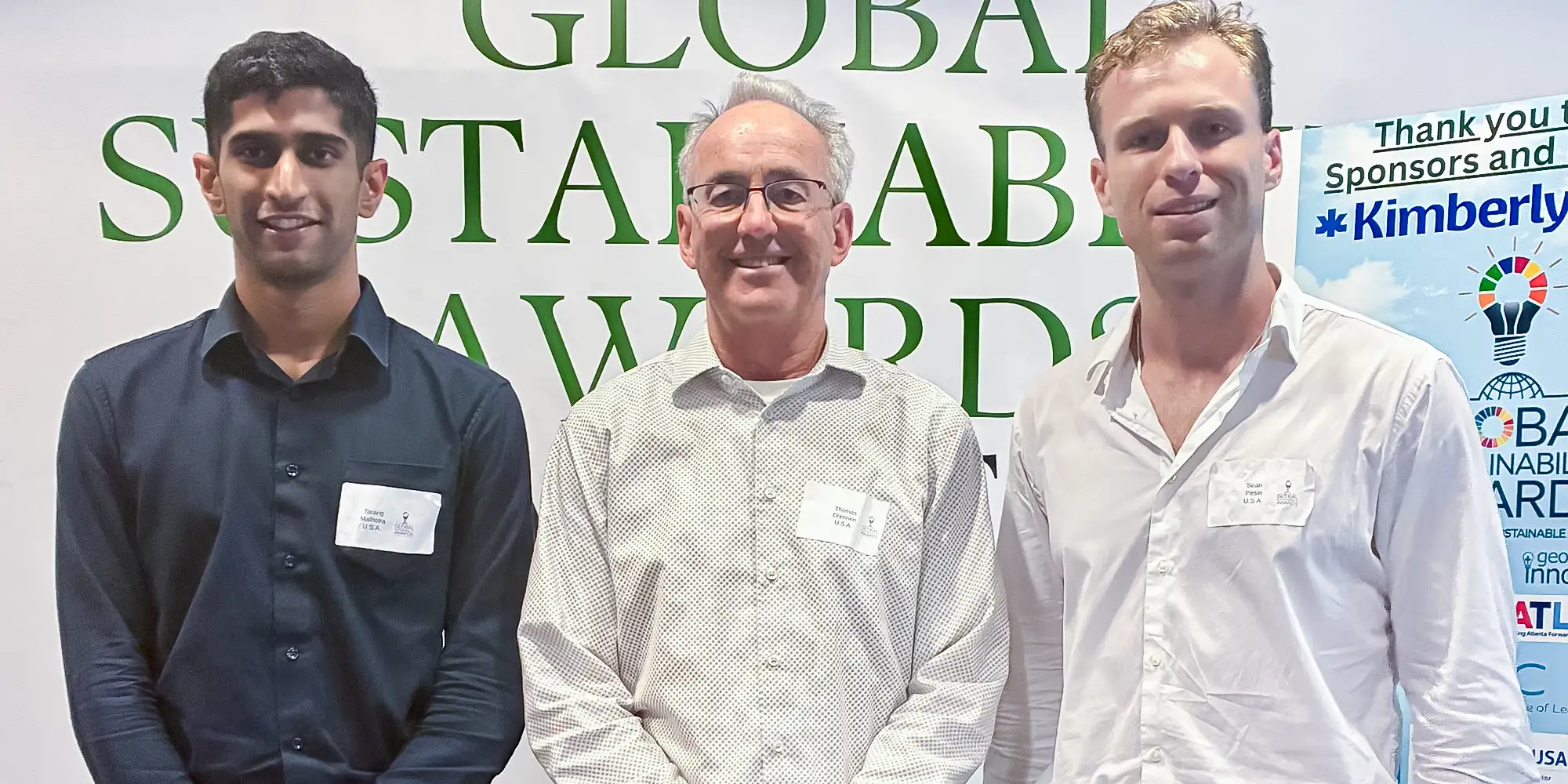
Top: Tarang Malhotra ’26, Professor of Business Management and Entrepreneurship Tom Drennen and Sean Pesin ’24 in Atlanta, Ga. this month for the Global Sustainability Awards.